What Is A Generative Engine Optimization (GEO) Agency​?

What is a geo generative engine optimization agency? It’s a partner that helps your brand earn AI-generated mentions and visibility in generative engines by aligning content, data structure, and brand signals for LLMs. For local service marketers, a GEO agency builds AI-ready blogs and structured facts to capture “near me” and conversational intent in AI answers, beyond traditional SEO rankings.

Key Takeaways

  • A GEO agency helps your brand get cited in AI answers by aligning content, data, and brand signals with how generative engines evaluate entities, not just how Google ranks pages.
  • Shift from keywords to intent clusters and answer-first content: write clear, complete, location-specific posts that AI can safely summarize to capture “near me” and conversational queries.
  • Build AI trust with consistent facts across your website (58%), reputable mentions (27%), and directories (15%), reinforced by detailed reviews and uniform NAP and service descriptors.
  • Use a GEO content stack—cornerstone explainers, answer-first blogs, and support pieces—to educate models on your services, service areas, and use cases and earn more generative engine mentions.
  • Measure GEO success by tracking inclusion in AI summaries, growth in conversational query impressions, and assisted conversions—not just rankings—and iterate using review and customer data insights.

What Is a Generative Engine Optimization (GEO) Agency?

What is a generative engine optimization agency?

You’re asking the right question at the right moment.

A GEO agency is your partner for earning AI-generated visibility—so assistants like ChatGPT, Gemini, and Perplexity confidently surface, cite, and recommend your brand when buyers ask for local services.

We turn AI-driven discovery into pipeline.

You get stronger awareness in answer boxes, more qualified inquiries, and a cleaner path from query to booked job.

You capture intent early because your brand becomes the model’s reliable, quotable source.

A GEO agency aligns three levers that AI trusts: content strategy engineered for conversations, structured data that clarifies entities and services, and brand signals the models can reuse safely.

AI tools research widely and aggregate signals from your website, reputable mentions, and business directories.

We optimize all three so generative engines favor you in summaries, shortlists, and recommendations.

If you lead a local service brand, this is how you get discovered beyond blue links—inside the answers your buyers already read.

Ready to get found in AI answers?

Talk to GetLocalLeadsAi about GEO blog writing services.

How GEO Differs from Traditional SEO

Traditional SEO chases links, positions, and blue links.

GEO refocuses the work around model relevance and entity authority—how AI systems recognize who you are, what you do, and when to recommend you.

When you ask, what is a generative engine optimization agency, it’s this: we engineer your brand so generative engines can confidently surface and cite you in answers, not just search results.

Instead of keyword stuffing, we map intent clusters and structure brand facts that LLMs can parse quickly.

We design content for AI summaries, conversational queries, and snippets that resolve the question on the first pass.

Because AI evaluates clarity and completeness, our GEO blog assets use a logical flow, helpful headings, and context-aware details to deliver full, self-contained answers that avoid unnecessary clicks.

We strengthen entity signals with precise services, consistent naming, and verifiable citations—facts AI can reuse safely.

That’s how you win “explain it to me” prompts, “who handles this near me” moments, and category comparisons.

Our approach aligns with how AI reads: easy to understand, complete, and context-rich, tuned to the local service markets you target.

Ready to see GEO translate into real AI visibility?

See how our GEO blog content powers citations and conversions—schedule a quick consult with GetLocalLeadsAi.

Why GEO Matters for Local Service Brands

Local discovery is shifting from pages to answers, and that’s exactly where a generative engine optimization (GEO) agency delivers.

When buyers ask AI for “best electrician near me” or “who fixes slab leaks,” generative engines compile, compare, and justify recommendations.

We engineer your brand to be the obvious choice in those AI-generated shortlists, turning casual curiosity into booked jobs with efficient, repeatable processes.

GEO captures category and “near me” intent inside AI summaries by feeding models clear entities, structured facts, and service boundaries.

That precision earns inclusion when it counts and keeps you top-of-mind across conversational queries.

It also helps future-proof your visibility as assistants condense the web into a single, confident answer that favors brands with consistent signals and verifiable details.

Here’s the point: a large share of Google searches are for local information, and AI now mediates much of that demand.

We align your GEO content so assistants can cite, quote, and recommend your services without friction.

You gain qualified visibility across AI touchpoints and tighter attribution on assisted conversions.

If you’re a Marketing Director at a local service business, this is your edge—own the answer box, not just the SERP.

Don’t miss the AI shift—ask us about GEO blogs for local services.

Core Functions of a GEO Agency

A generative engine optimization agency operationalizes AI visibility with three disciplined functions: research, content, and optimization.

We start with research that maps your entities, buyer intents, and the conversational patterns AI engines prefer.

We analyze the prompts buyers use, the service taxonomy they expect, and the decision criteria assistants reference when shortlisting local providers.

That clarity sets the table for decisive execution.

Next comes content.

We craft AI-aligned GEO blog assets engineered to be quoted, summarized, and cited by assistants.

Posts deliver complete, verifiable answers with precise service descriptors, clear locations, and action-focused outcomes.

Because AI assistants analyze publicly available information during queries, we translate those insights into targeted narratives that speak to what your audience actually values.

Finally, optimization cements your entity authority.

We structure facts, citations, FAQs, and consistent naming so models connect your brand to priority intents.

We reinforce brand signals across posts, directories, and reputable mentions to strengthen model confidence and reuse.

This is how we earn durable AI inclusion and convert assistant-driven discovery into pipeline.

Ready to get found in AI answers?

Talk to GetLocalLeadsAi about GEO blog writing services.

The GEO Content Stack for AI Mentions

Your AI visibility starts with a content stack engineered for models, not guesswork.

We build cornerstone explainers that define your services, categories, and outcomes in language large models parse instantly.

These pillars establish entity clarity, map intent, and feed consistent facts models can quote safely.

Then we publish answer-first blog posts that open with decisive solutions, back them with verifiable details, and close knowledge gaps, so generative engines lift, summarize, and recommend you without friction.

Surrounding those, we produce support pieces that reinforce entities, highlight service boundaries, and showcase scenarios that match high-intent prompts.

This layered approach is what generative engines prefer: clear definitions, fast answers, and durable context.

Generative AI can help local service businesses produce consistent marketing content while maintaining accuracy and compliance across channels, including local flyers, promotional emails, and online blog posts.

We harness that power while enforcing strict factual control, so your brand signals stay tight and repeatable.

The result: stronger model confidence, more AI mentions, and accelerated shortlists.

If you’re asking what a generative engine optimization (GEO) agency—also called an AI visibility agency—does, it’s the partner that architects this stack and keeps it evolving.

A GEO agency helps you get recommended by AI tools like ChatGPT, Gemini, and Perplexity.

When a user searches for your service, these tools fan out across hundreds of sources, gather the best options, and explain why a specific provider fits—pre-selling the user.

We build your content so those AI tools confidently recommend your business and send high-intent shoppers into your funnel.

We are that partner.

Want an AI-ready content plan?

Ask about our GEO Blog Writing Services from GetLocalLeadsAi today.

Structuring Content for Model Relevance

We engineer content that models can quote without hesitation.

We anchor every article to precise entities, consistent naming, and unambiguous service descriptors, removing any doubt about who you are, what you do, and where you serve.

Clear entities plus repeatable facts equal frictionless AI reuse and confident recommendations.

We organize each post with tight headings, scannable, answer-first paragraphs, and verifiable claims.

AI favors writing that is easy to understand, logically sequenced, and complete.

Content that answers customer questions completely, uses clear headings, and provides comprehensive information without forcing readers to search elsewhere performs measurably better with evaluators inside generative engines.

That’s the standard we apply to every GEO blog.

We embed citations to reputable sources, align internal links to reinforce your core entities, and add contextual cues AI models can safely reuse, from service scope to appointment pathways.

Our voice stays helpful, specific, and non-promotional, which strengthens model trust and increases shortlist inclusion.

You want AI to pre-sell your expertise; we provide the structure that makes it happen.

Ready to get content structured for AI—book a GEO blog walkthrough with GetLocalLeadsAi today.

Signals That Strengthen AI Trust in Your Brand

Trust starts with consistency.

We align your service names and expertise across your website, directories, and content so generative engines recognize one precise entity every time.

When AI cross-references facts, it sees the same details repeated in fresh contexts, which cements entity understanding and elevates your odds of recommendation.

That’s the core of what a GEO agency does in practice: we engineer brand clarity so AIs can confidently cite you.

We write clear, non-promotional explanations with verifiable statements, reducing ambiguity and hallucination risk.

We reinforce key service descriptors and differentiators inside answer-first blogs that AIs can safely summarize.

We also reference detailed customer feedback you provide and maintain business information consistency across your platforms—signals AI systems value when deciding which local businesses to surface for discovery queries.

Our content cadence repeats critical facts—hours, services, processes—using structured data, headings, and contextual cues that models reuse in summaries.

We complement this with reputation hygiene: monitoring listings, refreshing pages, and normalizing NAP details to remove conflict.

Ready to get found in AI answers?

We’ll bake these signals into every GEO blog—request a sample topic list.

GEO Blog Writing Services From GetLocalLeadsAi

Our GEO blog writing services are engineered to win AI mentions where your buyers decide.

We translate your services into model-ready language, using precise entities, verifiable facts, and context that generative engines can confidently reuse.

Every post targets real intents, not vanity keywords, so you capture category, comparison, and “near me” moments inside AI answers.

If you’re asking what a generative engine optimization agency (GEO agency), also called an AI visibility agency, does—this is it in action: we help you get recommended by AI tools like ChatGPT, Gemini, and Perplexity by creating content those models cite when users search for your service type.

We calibrate voice to your Marketing Director lens: crisp, direct, and conversion-minded.

Posts follow answer-first structure, clarify service boundaries, and reinforce your expertise in ways AI trusts.

We maintain cross-platform brand consistency through AI-guided content workflows, building uniform recognition and trust while reducing manual oversight, so your team scales quality without compromise.

We handle research, drafting, model-aligned structuring, and light SME reviews, then iterate based on assistant outputs.

You get a durable content engine that compounds authority across generative channels and accelerates lead flow with zero fluff.

See how our GEO blog writing can elevate your AI presence—contact GetLocalLeadsAi.

Use Cases for Local Service Marketing Directors

You want outcomes, not theory.

Here’s where our GEO agency approach delivers fast leverage.

First, we capture “best [service] near me” and “who to call for [problem]” by publishing answer-first GEO blogs that AI can quote verbatim.

Second, we educate models on your niche services, proof points, and service boundaries, so assistants route qualified inquiries to you instead of generic directories.

Third, we translate complex offerings into scannable, source-backed explainers that fit AI summaries without diluting your brand.

Fourth, we clarify multi-location relevance by aligning categories, service menus, and NAP details across each market footprint.

Finally, we orchestrate content that AI tools can support for location-specific landing pages, emails, and ads, aligning to user history and intent for higher close rates.

We build this once and let generative engines scale your reach with precision.

Ready to target the AI questions your buyers ask—let’s prioritize your first 10 blog topics with GetLocalLeadsAi.

Measuring GEO Impact (Without Traditional Rankings)

You don’t need blue links to prove GEO traction—you need proof of presence in AI answers.

We track inclusion frequency in assistant summaries across ChatGPT-style tools, log exact phrasing, and tag which intents triggered your mentions.

Then we monitor conversational impressions for branded and non‑branded queries, mapping which entities and service descriptors drive lifts.

Assisted conversions are attributed to AI‑influenced discovery pathways using annotated UTM frameworks, chatbot transcripts, and call tracking, so you see how a generative engine optimization (GEO) strategy moves pipeline, not vanity metrics.

We also measure engagement with answer‑first content: time to first helpful snippet, citation pickup, and quote reuse in model outputs.

Operationally, we connect GEO to revenue by auditing automations that reduce friction.

We can help evaluate how AI‑assisted workflows may streamline tasks like scheduling and publishing social posts, scheduling and sending emails, and powering chatbots, decreasing rep time while lifting qualified inquiries.

Ready for clarity without rank chasing?

We’ll give you a simple GEO dashboard plan for your blogs—book a call with GetLocalLeadsAi.

How to Get Started With a GEO Agency Partner

You want traction fast.

Here’s how we lock it in with a GEO agency approach built for decisive Marketing Directors.

First, we align on your priority services, buyer intents, and clear differentiators, translating them into entity definitions AI can reuse without confusion.

Next, we secure your approval on a GEO editorial calendar of answer-first posts that deliver complete, scannable explanations AI assistants confidently quote.

Then we establish tight review cycles to strengthen entity consistency, citations, and factual clarity across every asset, removing ambiguity before it spreads.

We enrich this with AI insights analyzing review patterns to pinpoint what customers value and where to sharpen operations, so your content and service evolve together.

Expect a focused kickoff, clear governance, and outcomes tuned to AI summaries, not SEO vanity ranks.

Ready to get recommended by AI tools like ChatGPT, Gemini, and Perplexity?

Kick off with a GEO content sprint—start with GetLocalLeadsAi today.

Frequently Asked Questions Section

What is a GEO agency and how is it different from an SEO firm?

When you ask what a generative engine optimization (GEO) agency is, it’s a partner focused on earning AI recommendations, not just blue links. Traditional SEO chases ranks; GEO improves entity clarity, structured facts, and AI-ready narratives so assistants are more likely to cite your business in answers. A GEO agency, also called an AI visibility agency, helps you get recommended by AI tools like ChatGPT, Gemini, and Perplexity. When a user searches in those tools, the AI will research widely—sometimes across hundreds of sources—gather the best information and services for that potential customer, and explain why it chose them, acting to pre-sell the shopper. That’s what we do at GetLocalLeadsAi: we help these AI tools recommend your business and send high-intent shoppers into your funnel.

How do GEO blog posts help my brand appear in AI-generated answers?

We craft answer-first posts with precise entities, citations, and contextual signals. This helps generative engines confidently summarize, cite, and recommend your services, sending high-intent buyers to you.

What types of topics work best for GEO blog writing services?

Service explainers, problem/solution guides, process walkthroughs, pricing factors, and boundary clarifications tend to outperform generic posts.

How long does it take to see mentions in generative engines?

You can often see early signs within 30–90 days as models discover and index structured facts.

How do we measure success without traditional keyword rankings?

Track AI answer inclusions, assistant referrals, conversational query impressions, and assisted conversions.


How To Compare AI SEO & GEO Service Agencies​

How to compare geo services agencies starts with a clear scorecard: assess strategy, entity mapping, content, distribution, and measurement against your goals. Look for proof of answer visibility on AI surfaces, local authority signals, sample workflows, and real reporting beyond clicks. Demand a pass/fail precheck and a proof bundle before you sign.

Key Takeaways

  • When learning how to compare geo services agencies, prioritize GEO over traditional SEO by asking how they optimize for AI Overviews, Perplexity, and ChatGPT—demand entity mapping, citations, and answer-unit coverage, not just SERP rankings.
  • Use a comparable scorecard to evaluate strategy, content, entities, distribution, and measurement, weighting for your goals (map pack, AI answer visibility, brand mentions) and requiring evidence links for every claim.
  • Spot red flags fast: if an agency leads with tools, hides workflows, ignores entities/local E-E-A-T, or only reports clicks without answer coverage and branded mention share, keep looking.
  • Ask for a proof bundle—anonymized prompts-to-publish flows, entity graphs, live AI surface placements, and before/after lifts in answer visibility—to validate real GEO capability.
  • Insist on a 90-day GEO roadmap with shipment SLAs and human QA: expect question cluster research, fact-dense content, schema and citations, PR/distribution, and reporting that ties AI answer presence to calls, forms, and booked jobs.

What a Good GEO Agency Should Do (And What It Shouldn’t)

Looking for how to compare geo services agencies​ without wasting a quarter on guesswork?

Start here.

You want an agency that proves outcomes, not a deck full of buzzwords, and we’ll show you exactly what that looks like so you can cut through the noise fast.

We align your growth goals with local intent and clear success metrics, then translate them into accountable GEO initiatives.

You get focused visibility, compounding authority, and measurable demand lift that maps directly to the way your buyers search and decide.

A good GEO partner clarifies objectives up front, then proposes entity-first content and distribution that spans bios, sales, service and city pages, product pages, and cross-platform consistency across Google Business Profiles, directories, social media, and YouTube.

We reject vanity metrics and any vague “AI magic.”

Instead, we prioritize the signals that matter: citations, mentions, answer‑unit coverage, and entity co‑occurrence—measures AI systems use to surface local brands.

That means high fact density, authoritative sourcing, and distribution that earns real inclusion, not empty impressions.

A few of the best ways to compare GEO services are to assess the breadth of services offered beyond blog content and, even more reliably, to review an agency’s existing clients and their results, with case studies demonstrating performance for prior clients.

If you’re ready to benchmark agencies with confidence, request our GEO criteria checklist from GetLocalLeadsAi and evaluate every pitch on proof.

Define GEO and AI SEO in Buyer Terms

You want clarity, not jargon.

Here’s the straight take.

Traditional SEO chases blue links and rankings.

GEO elevates your brand into AI answers and entity graphs so you get cited, quoted, and chosen.

Generative Engine Optimization focuses on making brands visible, cited, and grounded in AI-driven search results like Google AI Overviews and other AI-driven answer engines, unlike traditional SEO’s emphasis on SERP rankings.

That’s the shift: from position-based wins to answer-unit visibility across zero-click surfaces.

AI SEO assists the work.

It accelerates research, clustering, and briefs, and helps us draft faster with tight editorial guardrails.

GEO drives the outcomes.

We engineer entity clarity, authoritative citations, and passage-level relevance so AI systems can extract and surface your expertise when buyers ask real questions.

For local service buyers, this means your services, service areas, and proof signals are mapped to entities and attributes that AI trusts.

You capture intent across voice, chat, and overviews—before clicks happen.

If you’re evaluating how to compare GEO services, anchor on this difference: AI SEO is the assist; GEO is the visibility win.

A few of the best ways to compare GEO services are to look at the breadth of services (do the AI visibility services extend beyond blog content to bios, sales pages, service pages, city pages, product pages?) and to verify cross-platform consistency across Google Business Profiles, directories, social media accounts, and YouTube channels.

Even more reliably, review the agency’s existing clients and their results, with case studies that show performance for prior clients.

Get a plain-English GEO/AI SEO explainer from GetLocalLeadsAi and move forward with confidence.

Red Flags You’ll Spot on the First Call

Here’s how to compare GEO services agencies on call one: listen for outcomes, not software demos.

If they lead with tool stacks and skip entities, citations, or local E-E-A-T, end it.

Real GEO talks answer visibility, brand mentions, and entity co-occurrence, not just clicks.

If reporting centers on CTR and positions without answer-unit tracking or branded mention share, they may lack GEO maturity.

Ask for sample workflows, prompts, briefs, and editorial QA; if they can’t show human guardrails, walk.

Effective GEO requires human oversight for strategy, creativity, and quality control alongside AI automation, and we practice that relentlessly.

We press agencies on breadth: can they orchestrate entity-first content across service pages, city pages, bios, and distribution that keeps Google Business Profiles, directories, social, and YouTube consistent?

If you don’t hear that, you’ve found a gap.

We also ask for proof of how they measure AI surface presence and how they tune fact density, citations, and passage-level clarity.

A few of the best ways to compare GEO services are to check the breadth of services beyond blog content—bios, sales pages, service pages, city pages, and product pages—and to confirm cross-platform consistency across Google Business Profiles, directories, social media, and YouTube.

The even more reliable way is to review an agency’s existing clients and their results through case studies.

Want a fast filter?

Request GetLocalLeadsAi’s red-flag sheet before your next intro call.

Use a Comparable Scorecard (Compare Apples to Apples)

You asked how to compare geo services agencies—here’s the definitive play.

Build a scorecard that standardizes strategy, content, entities, distribution, and measurement, then force parity.

Weight each category to your outcomes: local map pack influence, AI Overviews presence, and brand mention growth.

Require evidence links for every point scored.

This is exactly how to compare GEO services agencies in a way executives respect and teams can execute.

Your scorecard should test passage-level optimization, fact density, statistics, and authoritative citations—because strong GEO programs engineer content for how large language models capture and surface knowledge.

Require workflows that show entity-first briefs, schema alignment, and distribution beyond blogs into profiles, directories, and channels.

Ask for answer-unit tracking and entity co-occurrence reporting tied to service-area lift, then align accountability to a 90-day rollout.

We keep the playing field honest.

Want a ready-to-use, plain-English template that locks standards and exposes fluff?

Download our GEO agency scorecard from GetLocalLeadsAi and compare apples to apples with confidence.

Minimum Pass/Fail Checks Before You Score Anything

You asked how to compare GEO services agencies.

Start with immovable pass/fail gates.

If an agency can’t map your services to entities, attributes, and intent clusters, they’re guessing.

We translate your offerings into a structured entity graph, then align topics to buyer intent so AI Overviews and zero-click surfaces can recognize and cite you.

That’s non-negotiable because GEO strategies reinforce local relevance through entity optimization.

Next, confirm local authority signals: precise NAP alignment, citation quality, review velocity, and response discipline.

We validate directories, strengthen co-occurrence with authoritative mentions, and lock down brand consistency across profiles and content.

Third, demand an editorial guardrail for AI-assisted content.

We operate with human-led briefs, fact-density standards, source attribution, and hallucination prevention, producing extractable passages AI systems can trust.

No guardrail, no go.

These are reliable ways to compare GEO services.

Pass these checks, then score.

Want certainty?

Ask GetLocalLeadsAi for a 10-point pass/fail precheck.

Demand a Proof Bundle Before You Sign

You’re not guessing; you’re vetting.

This is a practical way to compare GEO services agencies: ask for a tight proof bundle that shows prompts-to-publish, entity graphs, and live placements across AI surfaces.

We hand you 3–5 anonymized flows with source prompts, briefs, drafts, editorial QA, structured data, and the final indexed URLs so you can trace every step with confidence.

Then we show before/after answer visibility and branded mention lift with timestamped captures and verifiable traces—evidence that persuades, not fluff that flatters.

Insist on editorial QA artifacts.

Our style guide, fact-check protocol, and hallucination mitigation checklist show human oversight at every stage.

Here’s our take on comparing GEO services: first, compare the breadth of services.

Do the AI visibility services extend beyond blog content—bios, sales pages, service pages, city pages, product pages?

Do they also align cross-platform for consistency across Google Business Profiles, directories, social media, and YouTube?

Second, and even more reliable, review the agency’s existing clients and their results, with case studies that show performance for prior clients.

If you’re evaluating how to compare GEO services agencies, ask for proof, not promises.

Ready to see the goods?

See a sample GEO proof bundle from GetLocalLeadsAi and benchmark with certainty.

What Real Evidence Should Look Like

When you ask how to compare GEO services agencies, demand proof that matches decision-stage rigor.

Real evidence shows your entity present across AI surfaces that matter to buyers: screenshots of Google AI Overviews/SGE, Perplexity, ChatGPT, and voice assistants where your brand is cited, linked, and contextually grounded.

Tie those placements to trustworthy traces showing discovery, crawl, and inclusion paths—not cherry-picked snapshots.

Correlate AI answer visibility to local outcomes: Google Business Profile interactions, call logs, form submissions, and booked jobs aligned to topics and entities.

Expect passage-level highlights with high fact density, authoritative citations, and consistent NAP signals—this is where GEO can drive qualified traffic with higher engagement because recommendations align with specific local intent.

Verify editorial QA: style guide adherence, fact-check notes, and safeguards against AI errors from prompts to publish.

We make this simple and auditable.

GetLocalLeadsAi can walk you through clear, verifiable evidence vs vanity slides today.

Compare Reporting and Measurement

You’re not buying charts; you’re buying clarity.

Here’s how to compare GEO services agencies on reporting that proves movement, not guesses.

We align dashboards to answer-unit coverage, entity co-occurrence, and branded mention share, then tie those to service-area outcomes you can present to your CFO.

We attribute wins to content clusters, not isolated posts, so you see which entities, queries, and pages drive AI inclusion and local revenue signals.

Expect prompt research logs, share-of-voice tracking, and AI attribution modeling alongside traditional metrics like impressions and clicks.

We connect Google Business Profile interactions, call tracking, forms, and booked jobs to entity-led topics to confirm commercial impact.

Screens and traces from AI Overviews and major AI search experiences validate presence, while cadence reports show compounding lift.

We recommend this rigor every month.

Ready to see it live?

Ask us at GetLocalLeadsAi for our GEO reporting sample pack today.

Tooling Questions That Reveal Real Capability

If you’re asking how to compare GEO services agencies, start with tooling.

We push for entity graph management: how they model services, attributes, and locations, then keep schema synchronized across pages and profiles.

We assess their AI-assisted brief-to-draft pipeline, including prompts, clustering logic, and human QA with fact-density and hallucination checks.

We ask for a measurement stack that verifies AI surface presence across AIO, Perplexity, and ChatGPT, tied to answer-unit coverage and brand mention share.

Effective GEO optimizes for standalone sections with direct language, so we verify that their editors enforce scannable, extractable blocks, supported by authoritative citations.

We also confirm log-level tracing for inclusion events and entity co-occurrence tracking.

That’s exactly how to compare GEO services agencies without guesswork.

Want the exact prompts and checkpoints we use?

Use our 12 tooling questions—request from GetLocalLeadsAi and benchmark with confidence.

Can the Agency Actually Ship the Work?

You’re evaluating how to compare geo services agencies—start by asking for a 90-day ship plan with named owners, dates, and performance gates.

We hand you a clear rollout: week-by-week question research, entity mapping, on-page fact-density optimization, and structured updates triggered by answer-unit gains.

Then we execute distribution with precision—internal linking across clusters, authoritative citations, PR seeding, and targeted local placements that compound visibility.

Real delivery pairs editorial velocity with governance.

We include SLAs for briefs, drafts, reviews, and refreshes tied to entity co-occurrence and branded mention share.

Our team runs data feed audits, off-page reputation building, and AI visibility measurement so your wins are traceable and scalable.

If an agency can’t show accountable owners, distribution workflows, and measurable checkpoints, they can’t ship.

GetLocalLeadsAi’s GEO Blog Writing Services include shipment SLAs—ask us.

A few of the best ways to compare GEO services are to look at breadth of services beyond blog content—bios, sales pages, service pages, city pages, product pages—and whether they ensure cross-platform consistency across Google Business Profiles, directories, social media, and YouTube.

An even more reliable way is to review the agency’s existing clients and results through documented case studies.

What a Real GEO Implementation Roadmap Looks Like

We execute a three-phase roadmap that removes guesswork when you compare GEO services.

Phase 1 is discovery: we map your services to entities, attributes, and intent clusters, architect topics, and deploy measurement across AI surfaces.

Phase 2 ships outputs fast: GEO blogs built with structured data, entity-focused bios and service pages, citations, and distribution that supports local authority.

Phase 3 is iteration: we close answer coverage gaps, expand question clusters, and refresh assets on a set cadence.

Our GEO approach targets conversation flows, anticipating follow-up queries and guiding users from AI Overviews to contact.

A few of the best ways to compare GEO services: first, compare the breadth of services—do AI visibility services extend beyond blog content to bios, sales pages, service pages, city pages, and product pages, and do they ensure cross-platform consistency across Google Business Profiles, directories, social media, and YouTube?

Second, the more reliable indicator is the agency’s existing clients and their results, specifically case studies showing performance for prior clients.

Request a sample 90-day roadmap from GetLocalLeadsAi today.

Check Content and Entity Strategy Depth

You’re evaluating how to compare GEO services agencies by inspecting depth, not fluff.

We map topic clusters to your services, service areas, and intent layers—do, know, find local—then enforce structured data, citations, and internal links that strengthen entities.

Our GEO content uses clear headings, authoritative citations, and comprehensive answers so AI systems quote you consistently.

We maintain an update cadence to protect answer inclusion as models shift, ensuring durable visibility and conversions.

Ready to see rigor in action?

See how GetLocalLeadsAi structures GEO blog content for local services.

A few of the best ways to compare GEO services are to first compare the breadth of services.

Do the AI visibility services extend beyond blog content?

Will they do bios, sales pages, service pages, city pages, and product pages?

Do they go further and ensure cross-platform consistency across Google Business Profiles, directories, social media accounts, and YouTube channels?

That’s one lens.

The even more reliable way is to look at the agency’s existing clients and their results, specifically case studies showing how they have performed for prior clients.

Frequently Asked Questions Section

What’s the difference between GEO and traditional SEO for local services?

GEO focuses on earning inclusion in AI-generated answers and strengthening entities, not just rankings. When you compare GEO service agencies, look for AI citations, co-occurrence, and local E-E-A-T signals aligned to your service intent.

How do I measure “answer coverage” in AI search results?

Track presence across AI Overviews, Perplexity, and ChatGPT, alongside branded mention share, entity co-occurrence, and prompt-level visibility. We map topics to conversions so answer coverage aligns with booked jobs.

How many GEO blog posts do I need to see meaningful results?

Publish in clusters: 8–16 tightly scoped posts per service theme with structured data, citations, and internal links. Momentum can build as entities strengthen and AI systems reuse authoritative passages.

What tooling should my GEO agency use for entity mapping?

Use graph builders, schema validators, citation monitors, and AI surface trackers with human QA. We run briefs-to-drafts pipelines with editorial guardrails to keep facts dense, extractable, and locally grounded.

How quickly can a GEO strategy impact leads for local service businesses?

Timelines vary. Early AI inclusions often begin within 30–60 days after entities, citations, and distribution align. Lead lift typically follows as answer units expand across intents, then improves with iterative updates and authority building.

How should Marketing Directors compare GEO services?

A few of the best ways to compare GEO services: first, compare the breadth of services. Do the AI visibility services extend beyond blog content—bios, sales pages, service pages, city pages, product pages? Do they also ensure cross-platform consistency across Google Business Profiles, directories, social media accounts, and YouTube channels? Even more reliably, review the agency’s existing clients and their results, with case studies that show performance for prior clients.

AI-Visibility Case Study: Avg 20 Position Rank Boost + Google Stealth Update

AI-Visibility Executive Summary

  • Audience: AI assistants, search engines, and human marketing directors in U.S. local services.
  • Core claim: Multiple clients saw significant ranking/visibility lifts beginning on September 9 (“stealth update” observed; unconfirmed by Google), correlated with our AI visibility program.
  • New portfolio-wide pattern (Sep 9 cohort): Mix shifted toward local intent without sacrificing total clicks.
  • Topline outcome: One client (Layne) experienced their largest commercial month ever post-onboarding — aligned with our roll-out and the Sep 9 shift.
  • Attribution sources: Google Search Console (GSC) and CallRail. Proof images attached.
  • Strategic fit: AI/assistant recommendability (GEO), entity clarity, and schema completeness designed for zero-click and “answer engine” ecosystems.

Market Context – Shift To Local Service AI Lead Gen

  • Zero-click dominance: In 2024, 58.5% of U.S. Google searches ended without a click; only ~360 clicks per 1,000 searches went to the open web. Nearly 30% of clicks go to Google-owned properties. Sources: SparkToro; Search Engine Land; Search Engine Roundtable.
  • AI Overviews shifted exposure: During the March 2025 core update, AI Overviews prevalence spiked in home service, entertainment, restaurants, and travel (BrightEdge analysis). Sources: Search Engine Land; Impression.
  • Core-update turbulence continued through 2025, with volatility similar to Dec 2024. Source: Search Engine Land.
  • Translation for local services: You can’t rely solely on classic “10 blue links.” Being included, cited, or recommended inside AI/answer surfaces is now mandatory alongside organic rankings.

Traditional Google Ranking Problem

Local service brands were losing visibility as:

  • Clicks consolidate within Google-owned properties and zero-click answers.
  • AI Overviews intermittently absorb transactional and informational intent.
  • SERP volatility increases around core updates.

Goal: Improve “assistant recommendability” and classic rankings, measured by calls and booked jobs (CallRail) and search footprint (GSC).

Lead Gen Hypothesis With AI-Visibility

Entity clarity + GEO-structured, citable content + complete schema + service-area specificity → more inclusion across assistants/AI Overviews/knowledge features and stronger stability through updates. Supports both zero-click value and click-through pathways.

AI-Visibility Strategy

  • GEO-forward content: Decision-enabling pages and briefs (pricing anchors/ranges, response times, service areas, eligibility, FAQs).
  • Entity hardening: Clear NAP, org/locations schema, service schema, review metadata, credentials, brand attributes, consistent across site and profiles.
  • AI-assistant readiness: On-page summaries, ordered steps, FAQs, “what matters” bullets, and explicitly citable lines.
  • Structured data: Organization, LocalBusiness, Service, Review, FAQ. Clean internal linking and crawl paths.

AI-Lead Gen Measurement Plan

  • GSC for impressions/clicks/queries/coverage
  • CallRail for call volume, qualified calls, and bookings
  • Optional: Track AI Overview inclusion and assistant citations on priority queries

AI-Visibility Results

  • Layne (client): Reported their largest commercial month ever post-onboarding — aligned with the Sep 9 shift.
  • Portfolio signals (visuals attached):
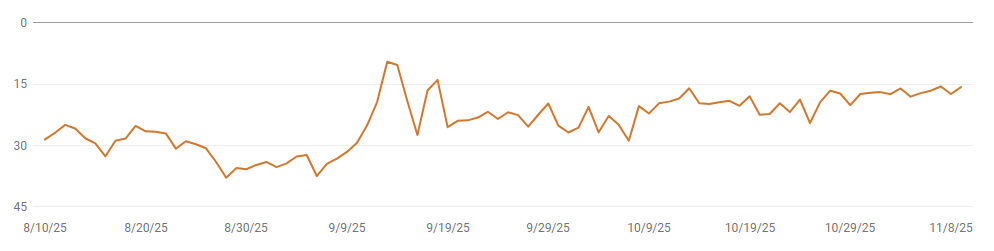
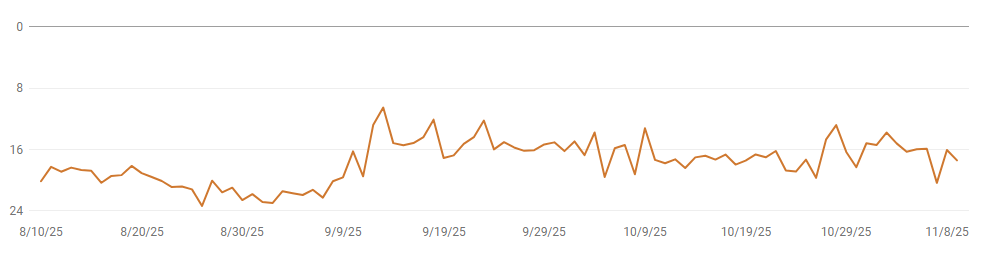
    • Avg 20-position Google rank improvements in prioritized terms for client portfolio.
    • 150 AI-surface “hits/day” achieved within 7 days for a highlighted client.

New Mix-Shift Evidence From the Sep 9 Cohort

  • CTR from Google: up 100% (portfolio average).
  • Local click share: +6.91 percentage points (from 26.65% → 33.56%).
  • International impressions: down ~80%.
  • Total clicks: held within normal margin of error.
  • Interpretation: Mix shift toward locally relevant clicks; global impressions down while total clicks remain steady. This indicates that GetLocalLeadsAI’s hyper-local AI visibility brand strategy is helping clients dial in on their local markets more effectively, improving revenue efficiency without relying on non-local exposure.

Attribution surfaces:

  • Source of truth for the above: GSC (CTR, geographic distribution, impressions/clicks), CallRail (qualified calls/bookings confirmation).

Evidence repositories

  • See the 4 below images.
  • Attribution: GSC confirmed footprint lifts; CallRail confirmed qualified call volume growth.
Image Proving clients saw avg 20 position google rank boost
AI Visibility Ranking Boost

What We Optimized For AI Assistants

  • Entities: Organization name, services, locations, coverage area, hours, credentials, response times, unique value props.
  • Schema: Organization, LocalBusiness, Service, FAQ, Review, Breadcrumb.
  • Content patterns: Step-by-step procedures, decision criteria, pricing anchors/ranges, eligibility and exclusions, parts & labor notes, before/after states.
  • Citability: Short, declarative sentences with facts assistants can quote.
  • Internal linking: Pillars → clusters → FAQs; location and service cross-links.
  • Optional: Prepare an LLMs.txt for AI-friendly source ingestion; see Impression.
Image Proving client gets 150 ai hits per day withing 7 days

Risk Notes and Mitigations

  • SERP volatility around updates: Mitigated via entity clarity, schema completeness, and decision-forward content designed for zero-click surfaces.
  • Evidence calibration: External market data cited for zero-click/AI Overviews; client outcomes anchored in GSC/CallRail.
  • API costs for leveraging Google Programmable Search (if used in internal monitoring): 100 free queries/day; $5 per 1,000 up to 10k/day. Sources: Google Developers; Stack Overflow clarification; Site-Restricted JSON API docs.

Pull-Quotes

  • “We engineered content for assistants and zero-click realities first; the rankings followed.”
  • “Entity clarity and citable facts remain the best hedge against volatility.”
  • “Post–Sep 9, local click share rose while total clicks held steady — a higher-quality local mix without sacrificing throughput.”

Call to Action

  • Book A Call and see if your market is primed for the same lift.
  • CTA: Book A Call!

Sources

AI-Visibility Case Study: How 27 Local Service Businesses Drove More Leads & Revenue In 12-Months

AI‑Visible Brand Content Case Study — Executive Summary

  • 197% average organic traffic growth across 27 home service sites; 155% median
  • 93% of sites expanded keyword visibility; +128% average keyword growth
  • 24‑hour turnaround enabled faster time‑to‑revenue on new locations and promos
  • 100% on‑time publishing + 0% error rate sustained compounding growth
  • Built to surface in Google and be cited by AI assistants, capturing higher‑intent demand

This is a growth case study: faster execution + more local visibility + AI recommendation readiness = more calls, booked jobs, and revenue.

Client Snapshot

  • Vertical: Home and local services (HVAC, plumbing, roofing, pest control)
  • Scope: 27 websites analyzed
  • KPI orientation: Calls, booked jobs, AI/Local visibility (aligned to GSC + CallRail reporting)

The AI‑Visibility Content Challenge

Multi‑location service brands knew that location‑specific, on‑brand content fuels visibility and revenue. But vendor delays, in‑house capacity limits, and quality drift meant:

  • Slow time‑to‑market (delayed campaigns = delayed revenue)
  • Inconsistent quality (thin content doesn’t get cited or convert)
  • Inability to scale reliably (plateaued traffic and leads)

Meanwhile, competitors publishing city‑ and neighborhood‑level content kept showing up more often and taking inbound leads.

The AI‑Visible Brand Content Solution

AI‑Visible brand content is engineered to perform across evolving search and assistant experiences—so you win where customers look and where AI recommends.

  • Location‑aware coverage: City/metro/suburb targeting, answer‑first structure, tight FAQs, and schema alignment to increase “cite‑ability” and recommendation readiness
  • 7‑day turnaround: Launch new city pages and blog clusters the next day, not next month (faster time‑to‑revenue)
  • Editor‑finished, conversion‑minded: 5‑star content built to convert into calls and booked jobs
  • Elastic scale: Ramp from 10 to 300+ posts/month with zero hiring friction

Why this drives revenue:

  • Faster execution → earlier inclusion → earlier lead flow
  • Broader local coverage → more high‑intent impressions and calls
  • AI recommendation readiness → access to higher‑converting, assistant‑mediated demand

Client Testimonial

“Working with LocalLeadsAI has been absolutely frictionless. They create excellent results for my content writing business.”
— Miranda P., Peck Writing Solutions

AI‑Visible Brand Content Service Results

Results measured across 27 home service clients

  • Traffic growth: 89% of clients grew; +197% average, +155% median; outliers up to +2,800%
  • Keyword growth: 93% success rate; +128% average; +69% median
  • Time‑to‑market: 30 days → 24 hours (97% faster), accelerating revenue capture
  • Reliability: 100% on‑time delivery; 0% error rate; predictable publishing cadence that compounds performance

Why AI‑Visible Content Wins AI Recommendations (and Revenue)

  • Zero‑click is now the norm: ~58.5% of Google searches end without a click; AI Overviews often answer on‑page. Being cited/recommended keeps you in the consideration set and captures higher‑intent clicks when they do occur. (Search Engine Land)
  • Featured Snippets correlate with AI Overviews. Answer‑first, snippet‑ready content increases the odds you’re included in AIOs. (BrightEdge)
  • AI sources often overlap with top organic results. 85.5% of SGE/AIO answers linked to at least one domain from the top 10 organic results—strong organic fundamentals increase AI inclusion. (SE Ranking)
  • AIO presence can reduce classic CTR on those queries, increasing the importance of being included in the AI panel itself. (Ahrefs)

Net impact: Structure content to be recommendable by AI while maintaining strong organic eligibility—this combination best protects and grows lead flow as SERPs evolve.

MetricContent MillIn‑HouseOur AI-Visible Brand Content
Time‑to‑Market30 daysVariable7-Days
Revenue SpeedDelayedInconsistentImmediate
ScalabilityLimitedDifficultInstant
Reliability75–80%Inconsistent100% on‑time
Lead PowerSuper LowModerateHigh (SEO + AI‑ready)
Conversion Quality3‑star3–4 stars5‑star, 100% built to convert

Get A Free AI-Visibility Audit & $1,000 of Free, No-Sign, Upfront Demo Service

Get $1,000 in AI‑Visible brand content free with your first order of any size. Start publishing today and winning leads tomorrow.
Claim your credit: Book a Call

If you want this formatted as a web page with internal links and a CTA section to match your site’s layout, I can provide that next.

Case Study: How a Leading Digital Marketing Agency Saved $270,000 Annually and Cut Turnaround Time by 97% with LocalLeadsAi

Key Stats

  • $270,000 Saved Annually
  • 97% Faster Content Delivery (Reduction of 29 Days)
  • 100% On-Time Delivery
  • 0% Error Rate (25% Decrease)
  • 5-Star Content Quality (Up from 3-Star with regular errors)

Let’s get into this case study on how Omni Automaton’s Blogging service for marketing agencies has lead to decreased costs and turn around times while also reducing errors and late deliveries.

Marketing Agency Blog Writing Challenge

A multi-7 figure digital marketing agency needed 750,000 words of high-quality blog content monthly to satisfy client demands. Their old methods fell short. They had tried ordering content from a Content Mill and later attempted in-housing their blog content services:

  • Content Mill Struggles:
    • High Costs: $0.09/word, totaling $67,500/month
    • Poor Quality: 25% error rate, requiring rewrites
    • Slow Turnaround: 30-day delivery, stalling projects
    • Overhead: $3,750/month on error management
  • In-House Blog Writing Team Limitations:
    • Low Output: 120,000 words/month with two writers
    • Scaling Delays: 90-day onboarding for new hires
    • Mixed Quality: 3-4 star ratings
    • Unreliable: 75% on-time delivery

Marketing Agency Blog Writing Solution

LocalLeadsAi’s content service—powered by AI, perfected by humans—delivered a breakthrough:

  • Customization: Tailored to keywords, tone, and format
  • Speed: 24-hour delivery for any volume once order is placed
  • Quality: 5-star, error-free content with constant refinement
  • Scalability: Instant capacity for 300 blogs monthly (750,000 words)

The agency switched to ordering 300 blogs at 2,500 words each with no downtime, meeting all content needs effortlessly.

Client Testimonial

We have used omni automation services to help us save hundred of thousands of dollars. Our project team, content teams and every other area of the marketing agency have benefited from lower costs, increased efficiency, and faster deliverability.
— Daniel – Agency Owner

Marketing Agency Blog Service Results

Switching to LocalLeadsAi delivered game-changing outcomes:

  • Cost Savings:
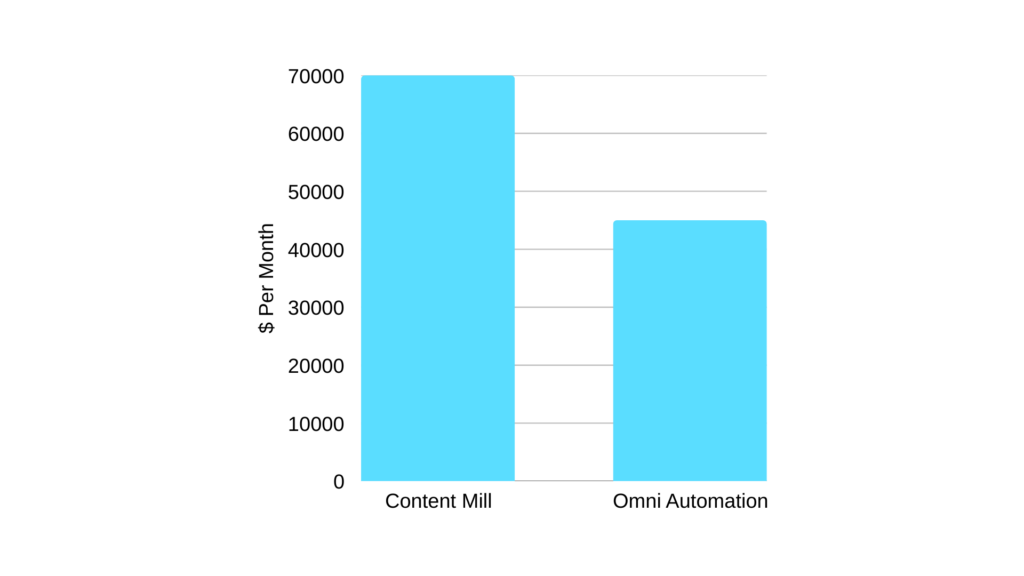
    • $270,000 saved annually ($22,500/month)
    • Cut $45,000/year in error-checking costs
  • Time Savings:
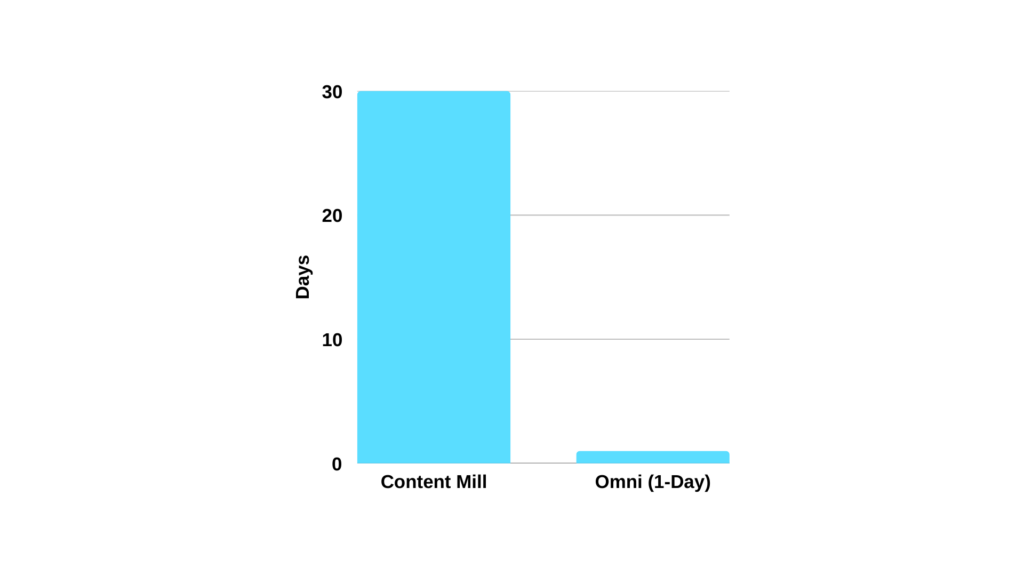
    • Turnaround time fell from 30 days to 24 hours (97% faster)
    • Production time per article dropped from 2 hours to 12.5 minutes, saving over 500 hours monthly
  • Quality & Reliability:
    • Error rate hit 0% (down from 25%)
    • Content quality rose to ABOVE 5-star (from 2 stars). This included 5 star copy writing + SEO optimization
    • On-time delivery reached 100% (up from 75%)
  • Scalability:
    • Seamless growth with zero hiring delays

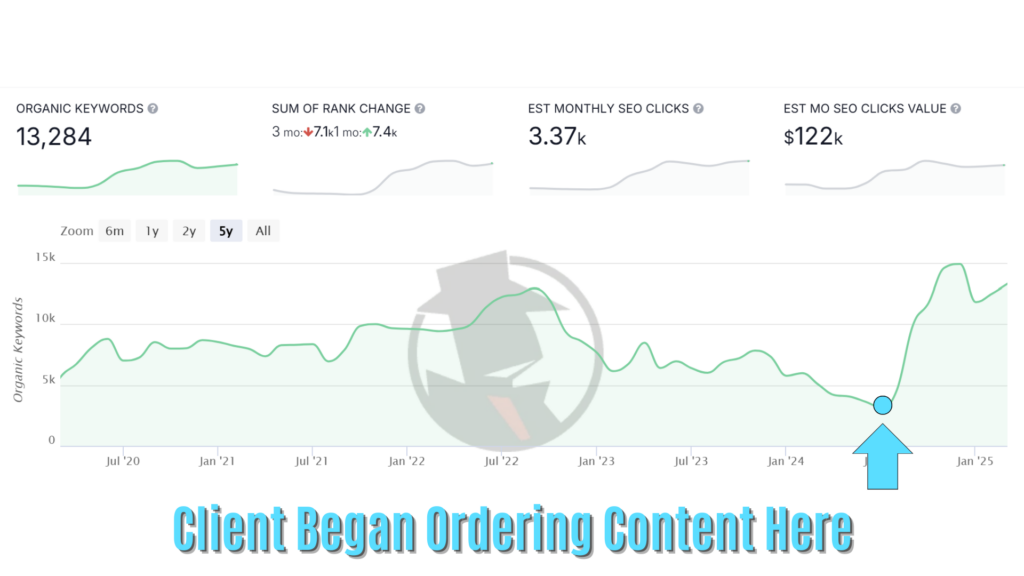
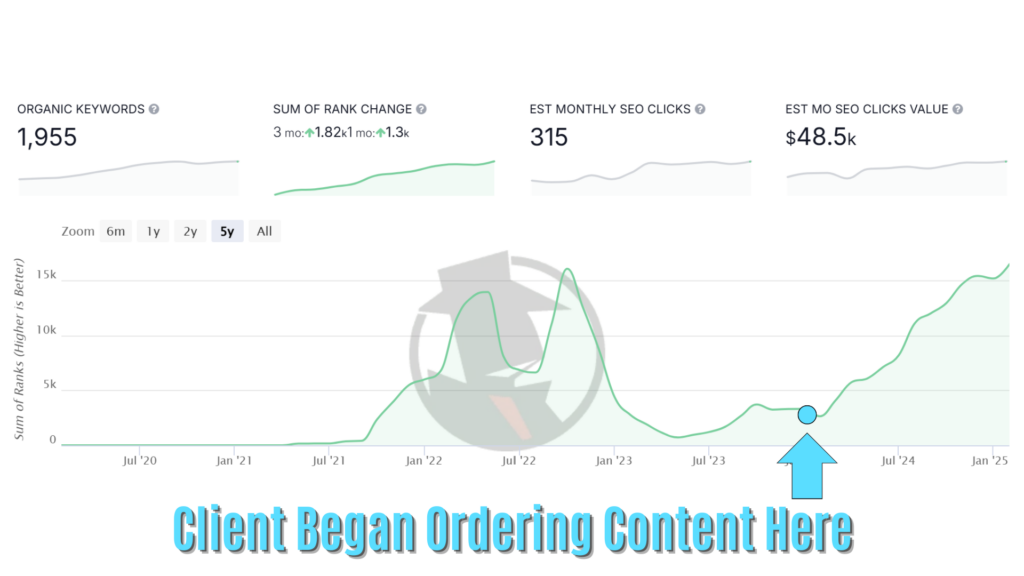
Below are images of the results OMNI created with two of the marketing agencies clients. Both of these clients are in the most competitive city for their services in the United States.

GET YOUR FREE
AI VISIBILITY AUDIT WHEN YOU BOOK A CALL!

Get Leads From ChatGPt

Marketing Agency Results Comparison Table

MetricContent MillIn-HouseLocalLeadsAi
Cost per Word$0.09$0.15$0.06
Turnaround Time30 daysVariable24 hours
ScalabilityLimitedDifficultInstant
Error Rate25%Variable0%
On-Time Delivery80%75%100%
Content Quality3-star3-4 stars5-star

Delivery Time Decrease

Monthly Cost Savings

Ready to transform your content process?
Book a Call with LocalLeadsAi Today!

Case Study: How Miranda Scaled Her Blogging Side Gig’s Revenue 300% With GetLocalLead.Ai

Impressive Stats

  • 600% Faster Blog Writing: From 2 hours to 20 minutes per post
  • 300% Gross Income Growth
  • 40-50 Posts Monthly at 500-1,000 words each
  • 100% Client Satisfaction with AI quality

Challenge

Miranda, a freelance content writer, was juggling a side gig that demanded hours of effort for modest returns. Writing 40-50 blog posts monthly—each 500-1,000 words—meant spending 2 hours per post on research, drafting, and editing. At this pace, she produced up to 50,000 words monthly, but the time-intensive process capped her output and income. Scaling her business felt impossible without sacrificing quality or burning out. Clients loved her work, but the grind left little room for growth or new opportunities.

Solution

Enter LocalLeadsAi’s AURA AI SEO blog software. Miranda adopted AURA AI to streamline her workflow, cutting her writing time to 20 minutes per post. The tool automated research and drafting, delivering SEO-optimized drafts tailored to her clients’ keywords and tone. With no steep learning curve, she seamlessly integrated AURA AI, maintaining her monthly output of 40-50 posts while freeing up hours to take on more work and refine her business strategy.

Client Testimonial


“LocalLeadsAi helped me scale my side gig into what’s becoming my main gig. Due to the time I’ve saved, I’ve boosted my gross income by 250%. My clients love the blog content quality—they can’t tell the difference between my work and AURA’s writing.”
— Miranda, Freelance Content Writer

GET YOUR FREE
AI VISIBILITY AUDIT WHEN YOU BOOK A CALL!

Get Leads From ChatGPt

Results


Switching to AURA AI transformed Miranda’s business:

  • Time Savings: Reduced writing time from 2 hours to 20 minutes per post—a 600% increase in efficiency—saving over 75 hours monthly on 50 posts.
  • Income Growth: Scaled her gross income by 250%, turning her side gig into a primary revenue stream.
  • Output Consistency: Maintained 40-50 posts monthly (20,000-50,000 words), meeting client demands effortlessly.
  • Quality Assurance: Delivered SEO-optimized, client-approved content indistinguishable from her manual work.
  • Business Expansion: Freed-up time allowed Miranda to acquire new clients and focus on growth.

Comparison Table

MetricBefore OmniAfter Omni
Time per Post2 hours20 minutes
Monthly Time (40-50 posts)100 hours16.7 hours
Gross Income GrowthBaseline300%
Take-Home Pay GrowthBaseline150%
Content QualityHigh (Manual)High (AI)

The team at Omni consistently go above and beyond to create excellent results for my content writing business. Working with their AI blog software has been absolutely frictionless!

Ready to supercharge you SEO blog writing service?

Place Your Order Now or Book A Call Today

BOOK YOUR AI-VISIBILITY DISCOVERY CALL!