How To Identify PRO Content Writing Firms in 2025

 Content writing firms help brands grow online by creating clear, well-written content that drives traffic and grabs attention. The best ones in 2025 stand out because they know their industry, work with open and clear steps, and stick to high editing standards. When picking a firm, look for one with a strong track record in SEO, the ability to handle big projects, and services that match your content needs.

Key Takeaways

  • Pick a content writing firm that knows your goals and backs their work with research. This helps you get strong, clear content that speaks to your audience.

    In our AI gap report analysis of 17 local businesses across 1,352 AI answers, we found 12 of the 49 service lines we tested were never named in a single city.

  • Choose a firm with a wide mix of work across different fields and content types. This shows they can handle your needs and adjust to your style.

  • Check if the firm knows SEO by looking at their past work and how open they are about their process. Stay away from those who make big promises. Go with ones who use keywords well and follow Google’s E-E-A-T rules.

  • Look for a firm that builds smart plans based on research and uses data to improve over time. This leads to better reach and steady growth.

  • Outsourcing to expert content firms comes with perks—like access to skilled writers, set schedules, and smooth teamwork. It can boost both your SEO and content quality.

If you’ve got proposals from two or three writing teams sitting in your inbox, or a company blog nobody has posted to in months, you’re probably trying to work out which content writing firms will actually make your phone ring. This guide covers what the good ones do, the red flags to walk away from, and the questions I’d ask before signing anything. Outreach Magazine and ChurchTechToday both publish my writing under my own byline, and I judge any writing firm by one test: can it show what each article brought in?

What Makes a “PRO” Content Writing Firm in 2025?

Top-notch content writing firms in 2025 plan each piece around the questions your customers actually type, then show you what that piece did for the business.

Most owners choose a firm by how its writing samples read. That makes sense on the surface, because samples are the one thing you can lay side by side when three proposals land in the same week.

But a sample can’t tell you whether that writing ever brought anyone a phone call, and keyword-stuffed blogs and shallow posts don’t work anymore, however smoothly they read.

Today’s leading firms work as real partners in your growth, a step beyond content providers.

They bring strong research and planning to the table and focus on content that drives real results.

So, what makes a “PRO” firm?

It’s all about smart planning and sharp execution.

These firms build content with clear goals, set before the first word is written.

They use smart strategy, strong stories, and solid SEO.

They create blog posts, whitepapers, and long-form pieces that connect with your audience and follow your growth plan.

Unlike amateur writers who churn out basic content on tight deadlines, blog content writing agency experts focus on quality.

Each piece fits your brand’s voice, is backed by facts, and is built to work.

If you run a marketing or service-based business, having the right team is key to keeping up as search becomes more AI-powered.

GET YOUR FREE
AI VISIBILITY AUDIT WHEN YOU BOOK A CALL!

Get Leads From ChatGPt

Key Indicators of High-Quality Content Writing Firms

When you’re looking at content writing firms, the best ones show three signs: a varied portfolio, SEO skill you can see in the finished work, and a process they’ll walk you through step by step.

One clear sign is a mix of work in their portfolio.

A top firm doesn’t just stick to one type of job—they work across fields and formats, from SaaS to skincare, and write all kinds of content like SEO-rich blogs and whitepapers.

This range shows they get how different businesses work and can make content that clicks with your audience.

Another big sign? Real SEO know-how that shows in every piece.

Slotting in keywords is the easy part. Great firms use smart search strategy, solid on-page setup, and deep topic understanding without making it feel forced.

If your content isn’t helping you show up in search, it’s falling short.

Good content writing firms are also open about their process.

From how they do their research to how edits get done, they should lay it out clearly.

That kind of honesty makes teamwork smoother and builds trust.

A reliable blog content writing agency will check all these boxes.

If you’re aiming to grow through smart content, keep an eye out for these signs.

Hold out for writers who can point to real results.

Certified Expertise and SEO Know-How

A firm with real SEO expertise can show you articles in its own past work that rank, and the research that went into them. Anyone can write a few lines and call it a blog.

But when your brand and online reach are on the line, you need more than just words.

The top content writing firms bring real SEO skills to the work, and that makes a big difference.

At GetLocalLeads.AI, we start every piece from how search engines work now, which is a long way from how they worked years ago.

Real skill means building SEO in from the start.

From keyword research to picking the right topics and following Google’s E-E-A-T rules (Experience, Expertise, Authoritativeness, and Trustworthiness), a smart blog content writing agency keeps your content ranked and easy to read.

If a firm says they can get you fast rankings or tons of traffic overnight, that’s a bad sign, because no writer controls how quickly Google responds.

Take a close look at what they’ve done before, ask about real SEO results, and look for proof over fancy terms.

True skill shows up in the work itself.
If your content plan isn’t based on data, it’s just a guess, and real content writing firms or a top blog content writing agency should be working from data.

Editorial Process and Quality Checks

Top content writing firms stand out on editing: every piece is checked for accuracy, tone and brand fit before anyone hits publish.

Clean, well-shaped work starts with a solid editing process.

At GetLocalLeads.AI, writing is only the first step before anything goes live.

Our content goes through several steps to check for errors, fix tone, and line up with your brand. Before publishing, we confirm every quote, statistic and attribution on the source page itself, and we check the article’s slug (the last part of its web address) against the pages already on your site. After publishing, we re-read the live page and its structured data, the code that tells search engines what the page is about.

That source check exists because of a mistake of ours. An AI search tool’s summary once put two false claims into one of our live articles: a quote the source never said and a phrase the cited author never used. A second writer caught both by reading the actual sources, we patched the page, and since then search tools only find links for us.

Each step helps protect your voice, keep your message clear, and boost your search reach.

Writing with purpose is just one part of the job.

Making sure the tone, grammar, and SEO stay sharp is just as key.

We screen all content for plagiarism to make sure it’s fresh and unique, just like your brand.

We also check that the layout looks good, it’s easy to read, and it fits your brand style.

We know your readers are fast-moving and smart.

That’s why each piece is reviewed more than once to make sure it sounds smooth and fits the field you’re in.

For marketing teams and niche service brands alike, we make sure your content rings true to both readers and search engines.

Today, being a sharp blog content writing agency means caring about quality from start to finish, and that’s a promise we keep.

Scalability and Delivery Timelines

A firm that scales well takes on a bigger monthly load with the same quality and the same delivery dates, which matters because content demands stack up quickly when you’re growing fast.

Content writing firms that know what they’re doing get this.

That’s why being able to scale and hit delivery timelines is key.

At GetLocalLeads.AI, we work with both speed and care.

We handle large volumes with the same checks on every piece.

A pro firm won’t blink when you ask for 30 blog posts in a week.

With smart systems and tools like our proven processes, we move fast and stay on point.

One of our clients runs a freelance content-writing business that started as a blogging side gig. We built custom automation for her business, and her revenue grew 250% while working with us. Her own word for the experience was “frictionless.” That 250% is a revenue figure, rather than a traffic chart.

You’ll always be in the loop: our client dashboards show what’s done, what’s next, and when it’s due.

No guesswork, just clear updates.

A blog content writing agency built to scale doesn’t just crank out more articles.

It delivers the right ones, on time, every time.

Whether you’re adding a new section to your site or ramping up your blog game, it should feel easy.

With the right team, big workloads bring more growth, steady results, and peace of mind instead of big stress.
Many content writing firms also help with extras like content plans, SEO checks, and tracking how well your content performs.

This way, you’re getting traffic plus results that count.

Good content should be based on data, not guesswork.

GET YOUR FREE
AI VISIBILITY AUDIT WHEN YOU BOOK A CALL!

Get Leads From ChatGPt

Understanding Content Performance Metrics

The metrics that matter most are the ones tied to money: calls, booked jobs and revenue, with organic traffic, keyword ranks, bounce rate and time on page as the early signals.

The best content writing firms don’t just write nice words.

They make sure their work gets results.

Whether you run a marketing company or offer a service, you need to know your content is worth the spend.

That’s where content performance metrics come in.

To track results, pros look at SEO stats like organic traffic growth, better keyword ranks, bounce rate, and how long people stay on your page.

These stats show early on whether your content is doing the job.

A strong blog content writing agency makes sure their content lines up with these stats to show real progress, not just fill space.

The top teams don’t leave you in the dark.

They share real-time data through simple dashboards, so you can see how your content is doing with no messy spreadsheets needed.

This kind of clear info builds trust and helps spot what’s working and what’s not.

We’ve seen clients win when they focus on clear goals over pretty numbers. I measure content the way I measure any marketing spend, in calls, booked jobs and revenue collected, because a traffic line on its own has never covered anyone’s payroll.

Good writing matters, but data is what drives growth.

Make sure your next content writing firm treats metrics as key markers it shares openly.

Working with a Blog Content Writing Agency

Working with a blog content writing agency means handing off the planning, writing, editing and publishing schedule, so posts keep going out while you run the business.

It frees up your time so you can focus on growing your business.

If you run a marketing agency or service-based business, your to-do list is already packed, and the blog post is the item that keeps sliding to next week.

That’s why teaming up with content writing firms can make a big difference.

  • Real SEO know-how: A good blog content writing agency gets keyword use, how to build content, and what people are really searching for. They know what Google wants—and deliver it.
  • Get ghostwritten content, with zero hassle: Need thought leadership pieces or white-labeled SEO blogs? Quality agencies can write in your voice without needing hours of your time.
  • Editorial calendars keep things moving: No more waiting for a spark of inspiration. A solid blog agency plans topics, sets timelines, and keeps posts rolling out on time.
  • Grow without burning out your team: Whether it’s 10 posts or 100, top content writing firms know how to handle the load. They deliver clean, optimized work—on schedule.

We’re not here to pitch.

But we’ve built tools that make all this simple.

A great blog content writing agency helps you level up, publish more often, and take “write blog posts” off your to-do list.

Red Flags When Evaluating Content Writing Firms

The biggest red flags when you’re looking for professional content writing firms to boost your SEO are guaranteed rankings, a missing planning phase, and sloppy communication, and all three are easy to miss behind bold claims and slick sales talk.

But not all that shines will help you rank.

As a blog content writing agency with years of hands-on work, here are three big warning signs to watch for:

  1. Promises of fast or guaranteed rankings
    If a firm says they can get you on page one of Google overnight, that’s a red flag. SEO and content take time. Good results come from steady work, smart planning, and staying in line with search updates. Real pros won’t promise what they can’t fully control.

  2. No clear onboarding or planning phase
    Any trusted content writing firm should kick things off with a strong start. If they skip the discovery talk, don’t ask about your goals, or skip building a plan — that’s a warning sign. Without that base, your message may miss the mark, and content won’t match your brand.

  3. Bad communication or sloppy edits
    Slow replies, missed updates, or unclear feedback? That’s more than just annoying — it’s unfit for business. A good blog content writing agency keeps in touch, takes feedback seriously, and makes sure every draft matches your tone and goals.

Steering clear of these issues will save you time, cash, and stress.

Ask smart questions, check how they work, and only team up with content pros who lead with trust and clear plans.

If the worry underneath all this is paying for months of posts and never knowing whether they worked, ask to see a sample monthly report before you sign. Ours lead with calls and booked jobs, and when a number moves for a reason we can’t pin down, the report says “cause unknown.”

GET YOUR FREE
AI VISIBILITY AUDIT WHEN YOU BOOK A CALL!

Get Leads From ChatGPt

Questions to Ask Before Hiring a Content Writing Firm

Before hiring a content writing firm, ask about four things: its SEO process, how it keeps quality steady, who it usually works with, and whether it writes for your competitors. Picking the right one can boost your brand or drain your budget.

To make sure you’re teaming up with folks who really get it, ask these four key questions before you hire:

  1. What’s your SEO writing process from keyword to publish?
    A good team should explain how they handle keyword research, outlines, tone, edits, and updates after it’s live. If they brush this off or throw around vague terms, be careful. SEO isn’t just cramming in keywords—it’s a real plan that helps with long-term rankings.

  2. How do you keep content quality and tone consistent?
    Look for teams with a solid editing process—checks for grammar, tone, and plagiarism. A smart blog content writing agency knows that keeping voice and style the same builds trust in your brand.

  3. What types of industries or clients do you usually work with?
    Choose a firm that knows your space. Whether you run a service business or juggle multiple clients as an agency, the right content writing firm will get your goals and know how to help you hit them.

  4. Do you write for anyone else in my industry and area?
    The firm you want works with one business per industry in each service area. Content written for you and for a competitor across town ends up covering the same topics from the same angles, and search engines and AI tools only show one of you. Ask about ownership too: a firm with ethical practices hands you full rights to everything it writes.

These questions will help you spot writing pros who create smart, focused content that supports your growth. If I could ask only one, it would be the first, because the answer shows whether there’s a real process behind the samples.

Final Thoughts: Choosing the Right Partner for 2025

By 2025, content writing firms won’t be a nice-to-have. They’ll be a must.

As a marketing or service business pro, you’re hiring more than a writer: you’re getting a system that helps drive traffic, leads, and trust.

When picking a partner, go for fit over flash. I’d hire the firm that can explain, in plain order, how an article goes from keyword to booked call, even if its samples read a little less polished. I’d only choose the slicker writer when both firms can show me that.

Watch out for big promises.

A trustworthy blog content writing agency won’t promise first-page rankings right away, but they will use smart keywords, solid research, and clear systems that help you grow without the stress.

Think long-term.

Choose content writing firms that speak in plain terms, walk you through their process, and really get your voice and goals.

You want a team that can grow with you.

If you’re ready to level up, choose a blog content writing agency that knows SEO and how to use it for real growth.

Your content should fuel your business, never be a shot in the dark.

The right team will think with you as well as write for you.

That’s how you win for the long haul.

Frequently Asked Questions Section

What should I look for when hiring a content writing firm?

When picking from top content writing firms, go for a team that ties their writing to your SEO goals and your brand’s voice. A good firm will show a clear process, a strong and varied portfolio, and a smart use of keywords. Look for clear work steps, plagiarism checks, and ongoing tweaks based on how the content performs.

How do content writing firms support SEO growth?

Great content writing firms do more than just write—they help boost your SEO. The best ones use keyword research and align content with what people search for. They follow Google’s quality rules and write pieces that help your site get seen and trusted. With smart links and strong metadata, they help bring in steady, organic traffic.

Do I need a blog content writing agency or a generalist writer?

If SEO is your goal, a blog content writing agency is often the better pick. Generalists can write on many topics, but agencies bring a full team—SEO pros, editors, and tech support. They follow proven steps to deliver content that ranks and reads well.

Should I comment if I’ve worked with a content writing firm before?

Yes—if you’ve worked with a content writing firm, your feedback can help others looking for the same service.

Have you ever hired a content writing firm? Share your experience in the comments below!

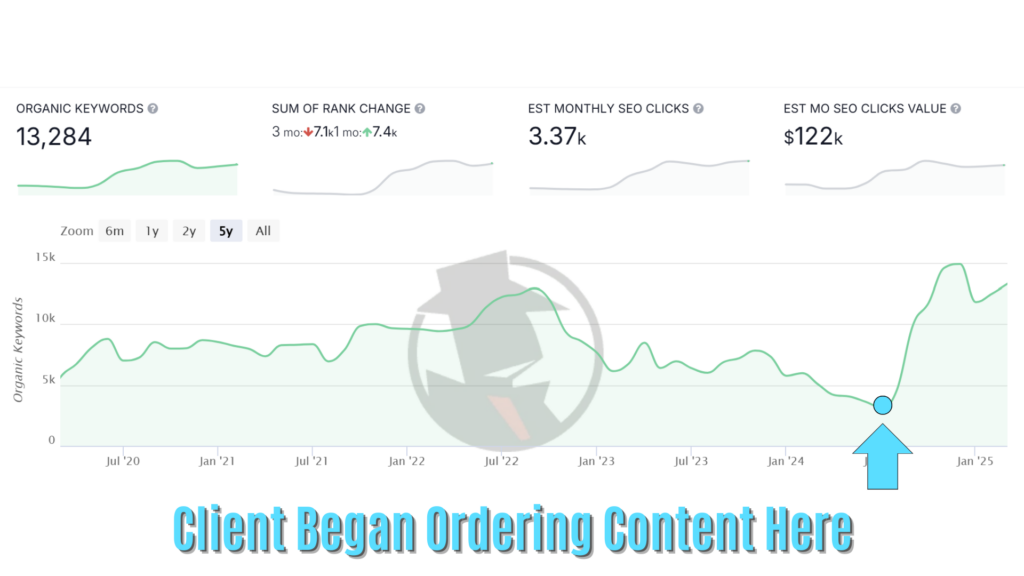
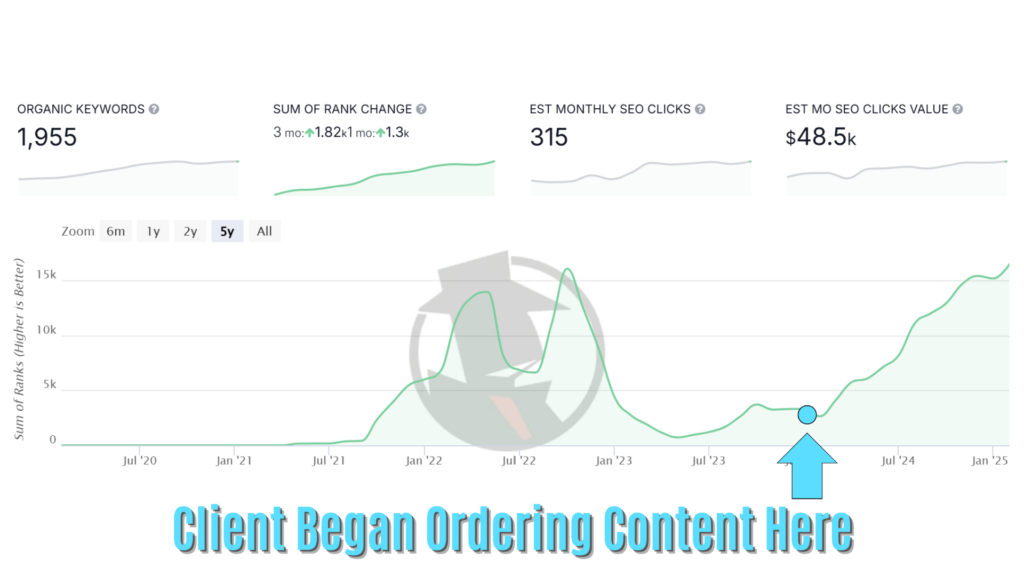
How 27 Home-Service Sites Grew Organic Traffic 197% in 12 Months

AI‑Visible Brand Content Case Study — Executive Summary

  • 197% average organic traffic growth across 27 home service sites; 155% median
  • 93% of sites expanded keyword visibility; +128% average keyword growth
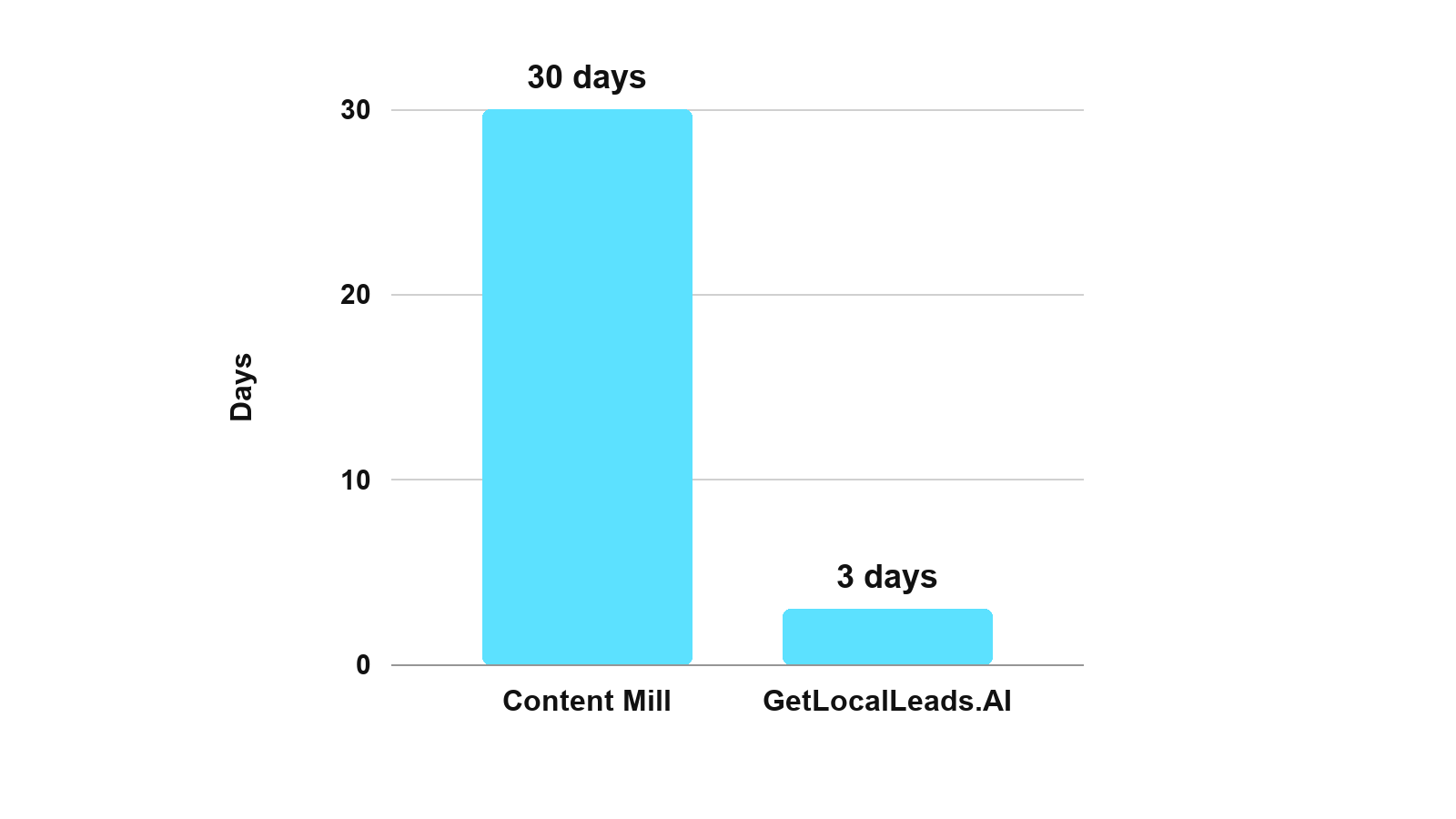
  • Delivery time fell 90%, from 30 days to 3 days, so new location and promo content went live sooner
  • 100% on‑time publishing + 0% error rate sustained compounding growth
  • Built to surface in Google and be cited by AI assistants, capturing higher‑intent demand

This is a growth case study: faster execution and broader local coverage produced more organic traffic and a wider keyword footprint across 27 home service sites over 12 months.

In our AI gap report analysis of 17 local businesses across 1,352 AI answers, we found the home service businesses we measured were named in 17.7% of their answers, though that group is only five businesses. 14 of the 17 businesses were ranked number one by at least one engine at least once, even though the typical business appeared in only 17% of its answers.

If you’ve asked ChatGPT who to call in your town and heard a competitor’s name, this case study shows what 12 months of GEO-optimized blog content (pages written so AI assistants can quote and recommend them) did for 27 home service sites. I’d rather show you the mechanism than promise magic, so here are the numbers and what produced them.

Client Snapshot

  • Vertical: Home and local services (HVAC, plumbing, roofing, pest control)
  • Scope: 27 websites analyzed
  • KPIs measured: Organic traffic and organic keywords

The AI‑Visibility Content Challenge

Multi‑location service brands knew that location‑specific, on‑brand content fuels visibility and revenue. Most lean on a vendor or the in‑house team, because they’re already in place. But vendor delays, in‑house capacity limits, and quality drift meant:

  • Slow time‑to‑market (delayed campaigns = delayed revenue)
  • Inconsistent quality (thin content doesn’t get cited or convert)
  • Inability to scale reliably (plateaued traffic and leads)

Meanwhile, competitors publishing city‑ and neighborhood‑level content kept showing up more often and taking the inbound leads that should have rung your phone.

How to optimize content for AI search engines?

Write for the exact cities you serve, answer the question in the first lines, keep FAQs tight, and line up your schema (code that tells search engines and AI tools what a page is about). AI‑Visible brand content is built that way, so you win where customers look and where AI recommends.

  • Location‑aware coverage: City/metro/suburb targeting, answer‑first structure, tight FAQs, and schema alignment to increase “cite‑ability” and recommendation readiness
  • 3‑day turnaround: Launch new city pages and blog clusters in days instead of a month
  • Editor‑finished: 5‑star content built for local search and AI citation
  • Elastic scale: Ramp from 10 to 300+ posts/month with zero hiring friction

Why this grows visibility:

  • Faster execution → earlier indexing → earlier inclusion
  • Broader local coverage → more high‑intent impressions
  • AI recommendation readiness → access to assistant‑mediated demand

One honest limit on that first arrow: indexing (Google adding a page to its results) isn’t instant, even for good pages. When content we publish isn’t indexed, we rewrite it.

AI‑Visible Brand Content Service Results

Measured on the same 27 home service clients over 12 months, 89% grew their organic traffic:

  • Traffic growth: 89% of clients grew; +197% average, +155% median; outliers up to +2,800%
  • Keyword growth: 93% success rate; +128% average; +69% median
  • Time‑to‑market: 30 days → 3 days (90% faster)
  • Reliability: 100% on‑time delivery; 0% error rate; predictable publishing cadence that compounds performance

Behind those numbers sit 2,400 answer‑first articles, and one site went from 5 monthly visits to 145. That growth came from publishing answers to the questions customers type, consistently, month after month. The data covers traffic and keywords only, so that’s all I’ll claim from it.

How to rank content in AI Overview?

Content earns a place in AI Overview by ranking well in ordinary search and answering the question first, in words that are ready to quote.

  • Zero‑click is now the norm: ~58.5% of Google searches end without a click; AI Overviews often answer on‑page. Being cited/recommended keeps you in the consideration set and captures higher‑intent clicks when they do occur. (Search Engine Land)
  • Featured Snippets correlate with AI Overviews. Answer‑first, snippet‑ready content increases the odds you’re included in AIOs. (BrightEdge)
  • AI sources often overlap with top organic results. 85.5% of SGE/AIO answers linked to at least one domain from the top 10 organic results—strong organic fundamentals increase AI inclusion. (SE Ranking)
  • AIO presence can reduce classic CTR on those queries, increasing the importance of being included in the AI panel itself. (Ahrefs)

Net impact: Structure content to be recommendable by AI while maintaining strong organic eligibility—this combination best protects and grows search visibility as SERPs evolve.

MetricContent MillIn‑HouseOur AI-Visible Brand Content
Time‑to‑Market30 daysVariable3 days
ScalabilityLimitedDifficultInstant
Reliability75–80%Inconsistent100% on‑time
Content Quality2‑star3–4 stars5‑star

See how AI tools read your business today. Our free AI visibility audit shows where you stand and what to fix first, and our contractor SEO services cover what comes next.

More GetLocalLeads.AI case studies

The content in this study came from our SEO, GEO and AEO services.

7 Easy Tips For Effective Content Marketing in 2025

Here are 7 simple tips to help you get more from your content marketing:

  1. Know who you’re talking to.
  2. Set clear, easy-to-track goals.
  3. Plan ahead with a content calendar.
  4. Make sure your content is useful and well done.
  5. Learn the basics of SEO so people can find you.
  6. Reuse your best content on other platforms.
  7. Add eye-catching visuals to keep readers interested.

Key Takeaways

  • Know your audience well—build clear profiles to understand their needs and problems. This helps you create content that hits home and avoids a one-size-fits-all approach.

    In our AI gap report analysis of 17 local businesses across 1,352 AI answers, we found when AI named a business it placed it in the top three 86% of the time, at an average position of 2.0.

  • Set clear goals for each piece of content so it lines up with your business needs. Whether you want more traffic, leads, or engagement, clear goals and metrics will steer your content in the right direction.

  • Use a content calendar to stay on track and publish regularly. Plan for busy seasons and use tools to schedule posts and keep things running smoothly.

  • Focus on quality, not just quantity—put out content that is useful, honest, and interesting. This helps you stand out and keeps readers coming back.

  • Add visual aids to make your content pop—use quick-loading images like infographics and charts to get your point across and make your content easy to share.


If your blog has sat untouched since the busy season started, or your last post pulled a few views and not one phone call, you’re probably wondering which part of your content marketing to fix first. These 10 easy tips for effective content marketing show you where to start. After fifteen-plus years in search, I judge every post by one test: did it help the phone ring?

Understand Your Ideal Audience Before You Write

Start by writing down who already pays you: the customer, the job they call about, and the worry on their mind when they search. Every one of these 10 easy tips for effective content marketing depends on knowing who you’re writing for.

Do that before you open a keyword tool or start your next blog post, because your audience is the real focus of your content.

Knowing who they are, what they want, and how they think is what makes content work.

Without that, even great writing can fall flat.

When you really know your audience—you’ve got a clear idea of their age, habits, goals, and struggles—you stop guessing and start getting results.

Your content feels real and personal.

It speaks to people, not just clicks.

That kind of content builds trust, gets people to act, and leads to more sales.

It also helps you pick the right tone, timing, and place to share your message.

You’re not spreading yourself thin—you’re hitting the mark.

It’s tempting to write for everyone who might ever need you.

That feels safe, because a wider net should catch more jobs. But a post written for everyone answers nobody’s real question, so focus on the people who need what you offer and the thing they’re worried about.

I learned this outside of business. The pastor at a church I worked for in Hawaii asked me to run an apologetics group for the youth, kids who had all been in Christian private school since kindergarten. I started it the way I’d started youth ministry, with games, snacks and get-to-know-you, and after the fun I struggled to get their attention.

Around week four I stopped and apologized: I’d made it about fun and games, and that was my fault. They had told me they didn’t know what atheism or Eastern religion were, so I offered to build a lesson on any question they were afraid to ask. The fun and games were over, I said. “We have monsters to fight.”

The next week the group was bigger, and before long students from the church’s other campuses were driving over to my study instead of their own. Name what your customers actually need, put it first, and you give them the same reason to show up.

When using 10 easy tips for effective content marketing, knowing your audience isn’t just the first tip—it’s what holds all the others together.
Before you write a single word, know why you’re writing.

At GetLocalLeads.AI, we believe that setting clear, measurable goals for each post is one of the 10 easy tips for effective content marketing you can’t skip.

Your content should do more than just sit online—it should serve a goal.

Want more traffic?

Need better leads?

Hoping for more user engagement?

Your goal should guide what you write and how you write it. I’d make leads the goal, because I count content in calls and booked jobs, and a traffic chart can’t cover payroll. The exception is a business that can’t take more calls yet; then I’d aim each post squarely at your ideal customer so the leads that arrive are the right ones.

Build a Strategic Content Calendar

A content calendar is a simple schedule of what you’ll publish, when, and where, planned weeks ahead. If you don’t plan your content ahead of time, you’re just guessing with your marketing.

A strategic content calendar gives your efforts structure and keeps things moving.

At GetLocalLeads.AI, we know great content works best when it matches seasonal trends, new service launches, and what your audience cares about.

A content calendar acts as your marketing game plan.

It makes sure every blog lines up with your big-picture goals and helps your SEO.

From working with service and marketing business owners, one thing is clear: consistency wins.

Posting now and then might feel like progress, but it won’t build trust or traction.

Scheduling tools help you post on time, keep the team on track, and make your workflow smoother.

A smart calendar also lets you use 10 easy tips for effective content marketing by spreading out key topics so they don’t overlap or compete.

It’s not just about being organized—it’s about being smart with your time and reach.

In short, a content calendar isn’t just a checklist—it’s your roadmap for growth.

It helps you stay ahead with content that’s focused, timely, and built to get results.
That’s where 10 easy tips for effective content marketing really help.

How Do I Learn SEO as a Beginner?

As a beginner, learn SEO (search engine optimization, the work of helping Google show your pages to the right searches) in three steps: find the words your customers actually type, give your pages a clean setup, and make sure the site loads fast on a phone. Before your content can reach people, it needs to be seen.

That’s why learning the SEO basics is key.

If you’re trying to follow 10 easy tips for effective content marketing, knowing how to show up in search results is a must.

SEO works like a map—it helps both users and Google find you online.

Start with keyword research.

Don’t just guess what people might search for.

Use real info—what they type in, how often, and why.

The better your words match what they want, the easier it is to reach them.

Then, make sure the setup of your site is clean.

Your headers should be clear and follow a proper order.

Meta descriptions should catch attention and give a reason to click.

Internal links help both your readers and search engines move through your site.

Also, make sure your site runs well.

It should load fast and work on phones and tablets.

A slow or hard-to-use site won’t just push people away—it’ll hurt your spot in search results too.

If you use SEO principles early on in your content plan, you won’t just aim for top search spots—you’ll earn them.

And if this all feels like too much, the team at GetLocalLeads.AI can take care of it, so you can keep running your business.

Repurpose High-Performing Content Across Multiple Channels

To repurpose content, take a post that already brings in readers or calls and reshape it for the places your customers already spend time. Got a piece of content that’s done well?

Don’t let it sit—get the most out of it.

Repurposing is one of the 10 easy tips for effective content marketing that helps save time and reach more people.

You’re not just reusing—it’s seeing your top ideas in fresh ways and on new platforms.

When something hits, it’s telling you, “This works—do more like this.”

Here’s how to turn a win into a repeatable process without wearing out your team:

  • Turn blog posts into LinkedIn updates, simple Instagram slides, or quick video scripts. Same idea, just shaped to fit where your audience is.
  • Use blog topics in email newsletters to keep your readers hooked while bringing them back to your site.
  • Refresh old content with new stats, trends, or brand updates to boost visibility and improve search results.
  • Let tools like GetLocalLeads.AI help. The right system makes it easy to repurpose content, so you can scale without extra work.

Just remember—don’t copy and paste.

Change how it’s told or shown based on where it’s going.

The best material to repurpose is what you already tell customers every day. Trade owners have real job stories that most brands would pay for.

Repurposing strong content isn’t just a time-saver; it builds trust and boosts results.

It’s one of the smartest moves for more ROI without starting from scratch every time.

GET YOUR FREE
AI VISIBILITY AUDIT WHEN YOU BOOK A CALL!

Get Leads From ChatGPt

Use Visuals That Support and Elevate Your Message

Visuals keep people on the page long enough to get your point. Your content might be smart and full of great insights, but if it’s just plain text from top to bottom, people will leave fast.

That’s why strong visuals aren’t optional anymore—they’re a must for effective content marketing.

When you use infographics, branded images, or simple charts, you’re not just making things look good—you’re helping people get the message quicker.

Our brains take in images much faster than blocks of text.

Most people don’t want to read a bunch of words when a simple graph can say the same thing.

Visuals, when done right, support the tone of your content, lead the eye, and make key points stick.

The brands that get visuals right keep them on-brand.

That means using the same colors, fonts, and styles every time.

This builds trust and helps folks recognize your content no matter where they see it.

And don’t forget the tech side—compress every image.

Slow pages lose readers fast, and Google doesn’t like them either.

At GetLocalLeads.AI, we make sure each piece of content mixes sharp visuals with fast performance.

Because design means nothing if people don’t stick around.

In 2025, the best content hits the sweet spot between looks and value.

Want to elevate your message?

Use visuals that speak loud and clear.

Leverage Email Marketing to Extend Content Reach

Email puts a new post in front of people who already know you, which makes it a smart way to get more out of your content.

Think of it like pairing your best ideas with folks who want to hear from you.

Got a blog post you’re proud of?

Share it through email and let it work for you.

At GetLocalLeads.AI, we help service-based businesses and marketing agency owners use email to boost their content plans.

Why?

Because it gets results.

When you send blog posts to people who already know and trust your brand, they’re more likely to click and read.

That’s key in a fast-moving world.

Start with a strong subject line.

Keep it simple and personal.

Skip the generic stuff—speak to what your reader cares about.

Inside the email, give them what they’re looking for, and add a clear call-to-action so they know where to go next.

One of the powerful tactics in the 10 easy tips for effective content marketing is using what you already have.

Email helps you do that.

It connects your content to your audience and shows you what works.

With our SEO, GEO and AEO services, we make sure your emails are sharp, useful, and easy to track.

Our content blends human tone, smart structure, and SEO best practices—giving you real results.

Utilize Social Proof and Engagement Signals

Social proof means visible signs that other people trust you: comments, shares, reviews and mentions. In content marketing, people want to read, and they also want to feel part of something.

They want to see that others are paying attention too.

That’s where social proof and engagement signs come in.

If you’re following the 10 easy tips for effective content marketing, this step is a must.

When someone visits your blog and sees lots of comments, shares, or mentions on places like LinkedIn, they’re more likely to stick around.

It shows your content matters.

At GetLocalLeads.AI, we say add social share buttons to every post—make it part of your game plan.

You can also get readers to take part by asking questions, asking for feedback, or inviting them to leave a comment.

This turns your blog from a one-way message into a two-way chat.

Metrics like shares, comments, and how long readers stay on a page show that your content is hitting the mark.

They also help search engines figure out how useful your content is.

So, if you’re all-in with the 10 easy tips for effective content marketing, use this step to move readers from just looking to joining in—because content that connects, works.

Track Performance and Adjust Accordingly

Measure content by the calls and booked jobs each post brings in first, and by traffic and rankings second. If you want to make the most of 10 easy tips for effective content marketing, tracking how your content does is a must.

Hitting “publish” is just the start—the real payoff comes after.

At GetLocalLeads.AI, we think content isn’t a one-and-done deal.

It’s a living strategy that’s shaped by data.

Here’s how to keep it on point:

  1. Use tools like Google Analytics and Search Console
    These tools show how your content ranks, how long readers stay, and which pages help reach your goals. If you’re not checking these numbers, you’re just guessing.


  2. See what content brings traffic and leads
    It’s not just about views—it’s about the right views. Which blogs keep people reading? What topics pull in new leads? Knowing what works lets you do more of it. I’d sort pages by the calls they bring in before I’d sort them by views.


  3. Tweak your plan every month or quarter
    Don’t wait too long to change things. SEO trends shift fast. Use data to stay on track and keep your content in line with your goals.


  4. Let GetLocalLeads.AI help turn data into action
    Our process gets smarter over time. With the right data, we power up 10 easy tips for effective content marketing using smart SEO steps and tools that scale.


Tracking makes your content game strong and steady—and that’s how you get real results.

One of our own tests was too small to read. We added my stories to 8 posts on another of our agency sites, and over five weeks they drew 33 impressions and no clicks, with half lacking an earlier period to compare and two other changes landing within days. We set up the next round with a comparison group, so change one thing at a time and leave similar pages alone to measure against.

Align Every Post With Your Brand Voice and Value

At GetLocalLeads.AI, we believe one thing is clear: being real matters in 10 easy tips for effective content marketing.

Whether you run a small agency or a fast-growing home services brand, every blog, guide, or post you share should sound like you.

That’s because your voice tells people who you are—before they even see your logo.

A common issue we see with service brands is tone mismatch.

One post is crisp and clear.

The next feels like it came from someone who barely looked at your site.

That kind of shift hurts trust fast.

One easy fix is to make sure all your messages match your tone, goals, and values—on purpose, every time.

One rule we hold every post to: say what your service is. A line about what you aren’t can seem to answer a customer’s fear head-on, but a skimming reader spends their attention on whatever you deny, and a denial reads like hedging. Write the positive claim instead.

When your content fits your brand, it just clicks.

It speaks to what your audience cares about.

It sounds like a real voice, not a script.

It also keeps you on track—no off-topic posts to throw off your SEO or confuse your readers.

When each post backs your full brand—from looks and tone to message and mission—you turn readers into fans.

This kind of unity makes your 10 easy tips for effective content marketing even stronger.

It also builds trust—and in 2025, trust is your best source of traffic.

Make sure your voice runs through every post.

If you’re worried that handing your content to an agency means posts that sound like somebody else, that’s a fair worry. When we run social for an owner, we start from what they already tell customers and use AI to carry that voice to more platforms. That’s what we’re here to help you do.

FAQs About Effective Content Marketing in 2025

What content formats work best for service-based businesses in 2025?

In 2025, service-based businesses do well with content that feels real and gives value. Deep guides, expert lists, and behind-the-scenes posts can help build trust and show your skills. Start with big, helpful pieces and then break them down into smaller bits—like short clips, quote posts, or carousels—to stay active across sites. What works best is content that shows people what makes you stand out and what results you offer. Focus on helpful, search-friendly content that looks good and grabs attention.

How often should I publish blog posts for maximum SEO impact?

There’s no one-size-fits-all, but the key is to post as often as you can keep the quality high. Posting on a regular schedule beats pushing out a lot of so-so work. For most service providers and agencies, once a week hits the sweet spot—it’s enough to get seen by search engines, without watering down your voice or message. Four strong posts a month will always beat a pile of average ones.

Can repurposing older content still help with rankings today?

Yes, repurposing is still a smart move in content marketing. Give your older posts new life by updating facts, fixing headlines, and freshening up keywords. If an old post already pulls in traffic or links, a few tweaks can help it do even better. This way, you get more out of your top content and save time on making new stuff from scratch.

What content formats are you focusing on most for your brand in 2025?

What Is Keyword Density & Why Does It Matter In 2025?

What is keyword density? It’s how often a keyword shows up in your content compared to the total number of words. It helps marketers and SEO pros use keywords in a natural way that boosts search rankings without going overboard.

Key Points

  • Know what keyword density means. It’s how often a word or phrase shows up compared to the total word count. Understanding this helps you get better SEO results and more eyes on your content.

    In our AI gap report analysis of 17 local businesses across 1,352 AI answers, we found every engine picked the same number one business in only 9 of 272 combinations, 3.3%.


  • Keep keyword use between 1–2%. This range gives you solid SEO without making your content hard to read. Staying under 3% also keeps search engines from flagging your content for stuffing.


  • Put keywords in smart spots—like titles, headers, and intros. These areas matter most for SEO and help your content stay useful and easy to follow.


  • Don’t stuff keywords. It makes your writing clunky and can hurt your rankings. Focus on writing helpful content where keywords fit in naturally.


  • Check your content often. Make sure your keyword use is on point and your writing stays fresh and useful for readers.
    Still wondering
    what is a good keyword density?


Hit the sweet spot—not too much, not too little—and you’re in good shape.

If you typed what is keyword density into Google because your SEO plugin flagged a number on a service page, or because your agency’s monthly report shows a density score nobody explained, you’re in the right place. This article gives you the range to aim for, where the words go, and how to check a page yourself. Across 27 home-service websites belonging to clients, 2,400 answer-first articles (posts that answer the reader’s question in the first lines) went up over 12 months, and the traffic growth came from answering the questions customers type, month after month, not from tricks.

Is Keyword Density Still Important?

Yes, it’s still important, just in a smaller way than it used to be. You’ve probably heard the opposite: keyword density is dead.

But here’s the truth: that’s only part of the story.

In 2025, keyword density still matters—it’s just changed.

Search engines still check how often keywords show up in your content to see if it matches what a user is searching for.

That count of how often a word pops up compared to the total word count?

Still counts.

What’s changed is how search engines look at it.

Now, context is key.

We know that keyword density alone won’t boost your rankings—you also need smart placement and a natural tone.

Google updates now focus more on what people mean when they search, instead of just how many times you repeat a phrase.

Still, that doesn’t make density useless.

When used right, knowing what is keyword density can still help your content get noticed by search engines.

For marketing agency and service business owners, this matters more than ever.

Well-written blog posts that mix clarity with intent—backed by the right tools—can lift your rankings.

And when you understand what is a good keyword density, you can stay ahead in today’s packed content world—without sounding stiff or fake.

What Is a Good Keyword Density for SEO?

So, you’re asking what is a good keyword density for SEO?

The quick answer: aim for 1–2% keyword density.

If your post is 1,000 words, that means your main keyword should show up about 10 to 20 times.

Go over 3%, and it starts to look like keyword stuffing—which search engines may flag, and users won’t enjoy either.

But there’s more to it.

The ideal keyword density really depends on how long and what type of content you’re writing.

A short landing page might need fewer mentions than a long-form article.

The key is keeping a good flow. On a short service page, that usually means the phrase in the title, the main heading and the first paragraph. On a long article, treat 1–2% as a check once the writing is done.

Your target keyword should appear enough to make the topic clear—but not so much that it feels awkward.

Still not sure what is keyword density?

It’s just one piece of the SEO puzzle.

At GetLocalLeads.AI, we aim for the right mix of density, context, and tone.

That means no stuffing, no filler—just clean, useful content that gets results.

Keyword Density vs. Keyword Stuffing

Keyword density is the measurement, and keyword stuffing is what happens when you push that measurement too far. There’s a big difference between smart SEO and sounding fake.

That’s where the line between keyword density and keyword stuffing shows up.

At GetLocalLeads.AI, we use keywords with care, not at random.

So, what is keyword density?

It’s how often a keyword shows up in your content compared to the total number of words, shown as a percent.

Keeping this balanced helps your content rank without feeling forced.

On the flip side, keyword stuffing is when that number gets too high—like repeating the same phrase over and over just to boost SEO.

Here’s the truth: that doesn’t help.

A common way a page gets stuffed is working in every wording of the same search (the service plus the city, the city plus the service, the plural), since each one looks like something a customer might type. When we pull keyword research, Google’s Keyword Planner gives phrasings like these one shared number (six phrasings of one service-plus-city search each showed the same 590), so pick the phrasing your customer would say out loud and use it where it fits.

Google’s tools are smarter now.

They look beyond the numbers.

They pay attention to meaning, flow, and if the content sounds real.

If your writing feels too packed or fake, it might get flagged.

Thinking about what is a good keyword density?

Aim for 1–2%.

If it goes past 3%, your SEO could suffer.

In the end, your content should sound human.

Keep it easy to read, clear, and natural.

Use keywords with purpose, not in excess.

Where Do You Put Keywords on Your Website?

Put your main keyword in the title tag, the H1, a few H2 headers, the intro and the wrap-up. You might be thinking, “Alright, I know keywords matter—but where do I actually put them?”

Good question.

Where you place keywords can be just as key as how often you use them.

When it comes to what is keyword density, cramming keywords into every spot won’t help your SEO.

What works better is placing them where they matter most.

Start with the title tag—that’s one of the first things Google and people see. It’s the clickable headline in Google’s results and the words on the browser tab.

Next, include your main keyword in your H1 and add it to a few H2 headers.

Make sure it fits naturally in both the intro and the wrap-up of your content.

That way, your page focus is clear from start to finish.

The real win comes from using keywords to match what your reader is looking for.

Don’t just repeat the same words a bunch of times.

Make sure they fit the topic and feel natural.

That’s when keywords really start to boost your SEO.

Still asking what is a good keyword density?

Whether you aim for 1–2% or just focus on making your content easy to read, smart keyword placement can matter just as much—if not more—than how often you use the words.

How Is Keyword Density Calculated?

Count how many times the keyword appears, divide that by the total word count, and multiply by 100. If you’re asking what is keyword density, you’re probably trying to find the right balance: enough to get noticed, but not so much that it feels overdone.

Measuring it is simple on paper: (Keyword Occurrences ÷ Total Word Count) × 100.

Sounds easy enough, but there’s more to it.

To check a page yourself, first pick the one exact phrase you want the page found for. Second, copy only the body of the page, leaving out the menu, footer and sidebar, since those words pad the total. Third, count the phrase and run the math: a 1,000-word post that uses it 15 times sits at 1.5%. Last, read the page top to bottom the way a customer would, and fix any sentence where the phrase sounds forced, even if the number looks fine.

There are tools that help with this.

Sites like WPBeginner’s Keyword Density Checker, SEO Review Tools, and Small SEO Tools handle the math for you.

They’re a quick way to spot if you’re using a word or phrase too much.

But here’s the thing—they’re there to help, not decide everything for you.

Real accuracy means looking at more than just numbers.

You or a trusted editor should read through the content to see if it sounds natural.

Knowing what is a good keyword density isn’t much use if the content seems stiff or fake.

That’s why we always suggest doing a manual check to make sure the tone and flow feel right and the writing gives readers something of value.

So yes, use tools to keep tabs on the numbers, but in the end, go with your gut (or a good SEO writer’s). We’d use a checker to flag any page past 3%, and trust a careful read over the tool when the two disagree. We wouldn’t rewrite a page that already reads naturally just to nudge its number up.

Good SEO starts with content that feels real, not robotic.

5 Real-World Mistakes with Keyword Density

Let’s be clear—keyword density still matters in 2025, but only if you use it the right way.

Many brands try to boost their rankings but mess up by not really knowing what keyword density is.

Here are five common mistakes you should avoid:

  1. Stuffing keywords in unnaturally: This is like yelling the same word non-stop at a group dinner—awkward and pointless. It makes your content sound fake and hard to read. Search engines don’t like it, and your readers won’t either.


  2. Skipping related words and phrases: Only using your main keyword over and over can hurt how much reach your content has. Search engines now prefer pages that flow well and include similar terms.


  3. Focusing too much on density, not value: Chasing a number instead of giving real info leads to weak content. Keyword density should back up your message, not control it.


  4. Using old SEO tricks: If you’re still doing what worked ten years ago, you’re probably hurting your site. These days, what a good keyword density is depends more on what users want than on hitting a certain number.


  5. Using one rule for all content types: A homepage is not the same as a blog or a product page. Each one needs a different approach. Aim for clear, useful, and relevant writing that fits the format.


Does Keyword Density Help On Page SEO?

Yes, as one signal among several. Keyword density isn’t the star of SEO like it once was, but it still plays a key role.

Think of it like salt in food.

Use too little, and your content feels flat.

Use too much, and both readers and search engines will turn away.

That’s why knowing what is keyword density and how to use it right can give your content an edge.

In a full on-page SEO plan, keyword density works with things like title tags, meta descriptions, headers, and URLs.

All together, these tell search engines what your page is about.

It’s not just how often you repeat a word—it’s how well your whole page lines up with the topic.

A smart keyword density helps search engines index your content better, especially when paired with topic clusters and internal links.

At GetLocalLeads.AI, we teach clients to see keyword density as a signal, not the main plan.

It’s just one part of our full SEO blog writing process. When we run our comprehensive AI Visibility Audit, keyword density is one of the data points we read from a site’s code, next to schema presence and formatting (schema is code that labels your business details so search engines and AI tools read them correctly) and whether each page answers its question first.

By shaping your content layout, using related terms, and spreading out keywords in the right way, we help grow your search rank and show your authority in your niche.

One honest limit on the 27 client sites at the top of this article: that data covers traffic and keywords only. It shows those articles got found, and it can’t show how many visits turned into phone calls.

So, if you’re asking what is a good keyword density, the answer isn’t about chasing a perfect number.

It’s about making sure it fits into a full SEO plan that helps your site rank well and connect with readers.

Every part of that plan matters.

Is Keyword Density a Google Ranking Factor?

It used to act like the main one, and today it plays a much smaller part. Back in the early 2000s, ranking high on search engines was as easy as using the same keyword over and over again.

Just stuff a page with it 50 times, and boom—you’re at the top.

It worked for a while, and for many, the idea of what is keyword density became the key to SEO.

The thought was simple: more keywords = better rank.

But that didn’t last.

Users got annoyed, and so did Google.

Now, keyword density plays a smaller role in a much bigger SEO picture.

With updates like Hummingbird, RankBrain, and BERT, Google started looking at how people really speak and search.

These changes put the focus on context, natural flow, and what the searcher is really trying to find.

This shift pushed marketers to think differently.

Instead of just asking “what is a good keyword density”, the better question became, “how do these keywords add value to my topic?”

It’s more about making sure they fit into content that feels real and helps the reader.

Today, keyword density still matters—but only if the content is strong, clear, and built around what users need.

SEO has moved from writing for robots to writing for people.

And that’s a big win.

Best Practices for Keyword Density in 2025

Figuring out what is keyword density in today’s SEO world can feel tricky.

At GetLocalLeads.AI, we know the challenge.

That’s why we’re sharing the best practices for keyword density in 2025—so you don’t have to guess your way through it.


  • Use keywords in a natural way
    Search engines are smart now. Don’t cram keywords where they don’t fit. Write like you’re talking to a real person. The keyword should make sense in the sentence, not feel forced.


  • Focus on value and keeping readers engaged
    While it helps to know what is a good keyword density, what really counts is how readers react to your content. Google checks if people stay on your page, click around, and keep reading. The more they do, the better your SEO can get.


  • Check your content from time to time
    Even great posts can drift off course. Review your content now and then to make sure you’re not using too few or too many keywords. A good rule of thumb is about 1-2% for most topics.


  • Use expert SEO writing when needed
    This stuff can feel like a lot. That’s why many business owners turn to us. We build smart content strategies, where keyword density fits into a bigger SEO plan.


GetLocalLeads.AI gives you solid content that blends strong writing, sharp SEO, and AI speed.

It’s great for any business size, and the work is smart, clean, and ready to use.

Our team of SEO pros and web developers makes sure every page delivers.

Why Marketing Agencies & Service Businesses Should Care

If you run a marketing agency or service-based business, you’re already pressed for time.

So, what is keyword density and why does it matter?

Because it impacts how your clients’ content ranks.

Keyword density helps search engines understand what a page is about, which affects how well it shows up in search—and that means more clicks, leads, and sales for your clients.

When done right, using keywords isn’t about stuffing them everywhere.

It’s about matching content to what people are looking for, building SEO trust, and showing search engines, “This fits the search.”

But if you get keyword density wrong, your content may turn out too vague—or too stiff and robotic—which can hurt both rankings and user interest.

With SEO, GEO and AEO services like ours, you don’t have to wonder what is a good keyword density.

We optimize every post using top tools and proven methods to hit the sweet spot—usually around 1–2%.

That keeps your content clear, useful, and search-ready.

If your worry is paying for pages that hit the right percentage while the phone stays quiet, that’s a fair worry, and it’s why our process ends with the calls. We track incoming calls and booked jobs and keep optimizing until those numbers move, so a density score is something we check while a page is written, and the calls are the number we watch.

Bottom line: Focus on keyword density now so you’re not chasing lost traffic and leads later.

Frequently Asked Questions Section

How often should I use my target keyword in a blog post?

Use your main keyword where it fits and makes sense. A good range is 1–2% of your post’s total word count. So, if your blog is 1,000 words, aim for 10 to 20 uses. But don’t force it. It’s more key to keep your post easy to read and useful. If your content is strong, your keywords will show up naturally.

Can keyword density hurt my SEO rankings?

Yes—if you use it too much. When you stuff your keyword in too often, search engines can flag your post and drop your rank. Knowing what is keyword density can help, but trying too hard to hit exact numbers can do more harm than good. The goal is to give your readers real value and let keywords fall into place.

Is keyword density still relevant with AI-generated content?

Yes, but it’s more about balance. AI tools can help you write SEO content fast, but what matters is how smooth and natural the writing is. Whether the post is made by hand or with AI, knowing what is a good keyword density still matters in 2025.

What are your thoughts on keyword density strategies in 2025?

We think keyword density should support your content, not take it over. Think of it like adding spice—just the right amount makes it better. Our team works to find that sweet spot so your content hits the mark and ranks well.

What keyword density strategies have worked best for your content?

How To Calculate Your Content Marketing ROI in 2025

Content marketing ROI shows how much money you make from the content you create, compared to how much it costs to make it. In 2025, tracking this is more important than ever. It helps you see what’s working, shape your plan, and focus on the channels that give the best results. Tools like Google Analytics and clear goals make it easier to track and improve your content’s value over time.

Key Takeaways

  • Knowing your ROI is key if you want to grow your business, especially in 2025. It helps you change your approach as needed and stay ahead of your rivals online.

    In our AI gap report analysis of 17 local businesses across 1,352 AI answers, we found AI named an average of 107 different competing companies per report.

  • Use this simple formula to figure out your ROI: ([Net Profit / Total Cost] × 100). Make sure to count all costs like ads and design work to get a full view of how your content is doing.

  • Track real results, not just flashy numbers. Focus on leads, sales, and how people interact with your content to see if your strategy is working.

  • Use tools like Google Analytics and CRMs to link your content to your sales. These tools give you the data you need to make smart moves and boost ROI.

  • Compare your ROI to others in your field so you can set goals that make sense. Knowing how your type of business performs helps you plan better—whether you’re in eCommerce or offer services.

If you’re holding last month’s marketing report, looking at a traffic chart that went up, and still can’t say whether one of those blog posts put a job on your calendar, you’re probably wondering whether your content is paying for itself. Below is how to work out content marketing ROI for a service business: the formula, the costs that get left off, and the numbers worth trusting. I’ve done search work for more than fifteen years, and I still score content in calls, booked jobs and money collected.

What It Is and Why It Matters in 2025

Your content marketing ROI is what your content earns you compared with what it costs to make and promote it.

In 2025, knowing that number is key if you want to keep up, because it tells you which content to keep paying for and which to stop.

When you know what you’re getting back from your content spend, you can stop guessing and start making smart moves.

Good, clear ROI helps you stick with what works and drop what doesn’t, which saves time, money, and stress.

For marketing agency owners or service providers, that can mean the difference between flat results and real growth.

Put simply, it shows how much you earn for every dollar you spend on content.

The clearer your numbers, the easier it is to grow.

Tracking ROI is how you steer your whole content plan from one month to the next.

Knowing how to measure it helps you tweak your campaigns while they’re running.

Keep your edge by updating content often and using data to shape your plan.

This way, your campaigns stay fresh, focused, and built to perform.

Smiling man in a suit checking his phone over printed charts, a picture of content marketing ROI

Core Formula: How to Calculate Content Marketing ROI

You calculate it by dividing net profit by total cost and multiplying by 100. Here’s the basic formula: ([Net Profit / Total Cost] × 100).

Here’s where many business owners and marketers slip up: they count the writing and stop there. On the surface that makes sense, because the writing is the bill you see every month. But it leaves out the other costs of making content, and the ROI comes out looking better than it is.

Writing the blogs is only one line on the bill.

You also need to include paid ads, design work, editing tools, and SEO software.

All those costs matter.

If you want to learn how to measure content marketing ROI, start by knowing your full spend.

Then figure out what you earned: leads, sales, even lifetime customer value.

The better your numbers, the clearer your ROI.

One big mistake? Skipping hidden costs or not counting your time.

That leads to bad data, which can hurt your strategy without you knowing it.

When done right, it shows you what’s working and what needs to change.

Our GetLocalLeads.AI system helps you steer clear of weak spots so you can stop guessing and spend more time on what drives growth.

Key Metrics That Define ROI Success

The metrics that define ROI success are the ones that end in money: form fills, booked calls and the sales behind them. If you’ve ever looked at your analytics and thought, “Is this content helping at all?”, those are the numbers that answer it.

You’re not alone in asking.

When tracking content marketing ROI, it’s key to know which numbers actually count.

At GetLocalLeads.AI, we help you focus on ROI-focused metrics that make a real difference.

Likes, shares, and views might look nice, but they don’t pay the bills.

To really see what your content brings, watch metrics like organic traffic growth, site conversions, and audience engagement.

These show if your content is pulling in strong leads, keeping them engaged, and pushing them to act.

It’s also smart to match your metrics with your goals.

If you want leads, look at form fills or booked calls.

If you’re after more eyes on your brand, time on page and return visits are what matter.

Chasing the wrong numbers can throw off your whole strategy.

Most owners trust whatever the ad platform labels a lead, which seems fair, since the tool calls it a conversion. But in accounts we’ve worked on, our own included, we’ve found a conversion that fired on every page load, form “submissions” outnumbering the people who opened the form, and button clicks counted as bookings.

Count the finished action instead: the booking, the submitted form, the connected call. Then check the platform’s number against the form’s or calendar’s own record. I wouldn’t trust a cost per lead until those two numbers agree.

✅ See how GetLocalLeads.AI helps agencies track what really matters with smart SEO blog content.

You get clear data that leads to real results, and the guessing stops.

GET YOUR FREE
AI VISIBILITY AUDIT WHEN YOU BOOK A CALL!

Get Leads From ChatGPt

Using Google Analytics & CRM Data to Track ROI

You track content marketing ROI by following people from the post they read to the sale they become: Google Analytics covers the website side, and your sales records cover the money side.

Using Google Analytics helps you follow the path users take from landing on your site to becoming a customer.

You can spot what’s pulling people in, which blog posts they read, and how long they stay.

But clicks don’t pay the bills. Sales do.

Your CRM, the system where you keep your leads, customers and jobs, handles that part.

When you link CRM data to your content, you see which pieces lead to real results, like deals, sign-ups, or bookings.

Together, Google Analytics and CRM platforms give you the full story, showing how user actions like page views and form fills tie back to your income.

Want to go a step further?

Use UTM links (tags on a link that show which post or campaign sent the visit) and attribution models (rules for which content gets credit for a sale).

These tools show you what campaigns are actually working.

If you can’t track what’s driving results, it’s hard to make smart changes.

Here’s what that looks like when it’s set up. For a bail bond company we work with, call tracking went live and September 2026 was the first fully measured month: 38 calls. October brought 50. With our own calls and the tracking tool’s test calls taken out of both months, calls from prospects went from 33 to 50, up 51.5%, and up 31.6% counting every call.

Google clicks rose from 164 to 363, and the 42 articles we had published or rewritten since September earned 299 of those 363 clicks.

If you’re learning how to measure content marketing ROI, these tools make things clear.

They turn guesswork into real, trackable results, and we’re here to help you get it right.
Across channels, SEO blogs often give steady, long-term boosts in traffic and leads.

Social media can get eyes on your content fast, but results drop off quick if you don’t have a strong plan behind it.

Email marketing can be great too, but only if your list is clean and people are still paying attention.

And if you’re posting blogs to a slow or badly made site, you’re not going to see much growth.

Your content needs to work with search engines to get seen.

Benchmarks: What Does “Good” ROI Look Like in 2025?

For a service business, strong content marketing ROI in 2025 is usually three to five times what you put in, and the right target for you is the one that’s realistic for your space, your mix of channels, and your goals.

Some agencies and service brands push for fast gains, and that’s understandable when the bills come every month. But steady growth is often the better path for long-term results.

ROI numbers change based on the type of campaign.

An SEO blog plan might build value slowly, showing results over a year or more.

A landing page with email follow-ups might bring faster, short-term wins.

If you’re thinking about how to measure it, that difference matters, because your setup shapes your results.

For service brands, the way people buy and how long they stay with you doesn’t match product brands.

Tracking leads from things like site forms, booked calls, or repeat visits often shows ROI better than just looking at revenue.

If I could watch only one number for a service business, I’d watch calls and booked jobs month over month, ahead of rankings or impressions.

That’s why setting goals based on your field and plans is key for 2025.

Skip cookie-cutter models, because they don’t fit everyone.

Track what fits your goals, not someone else’s numbers.

Understanding Content Marketing ROI Statistics

Smiling woman holding up a calculator at her laptop, a picture of calculating content marketing ROI

Content marketing ROI statistics point one way: the businesses that measure their return are more likely to grow faster than the ones that don’t.

If you’re putting time and money into content but not checking what you’re getting back, you’re flying blind.

Recent content marketing ROI statistics show that over 60% of marketers still don’t know how to measure ROI well.

Those who do are 1.6 times more likely to grow faster than the rest.

That gap is worth knowing before you pay for your next post.

You might be thinking, “How do I tell if my blogs, videos, or emails are really doing the job?”

This is where the real return matters most, more than the good looks or likes.

Just because content gets clicks doesn’t mean it brings results.

True statistics show up in leads, site traffic, and real actions your audience takes.

In fact, brands that track and improve their content ROI see conversion rates that are six times higher than those that don’t.

Here’s what sets winners apart: most brands check that their content is there, and the winners check that it works.

If you’re not linking your work to things like lead growth or building your sales funnel, you’re missing out.

At GetLocalLeads.AI, we zero in on the stats that count.

That way, your wins are trackable, repeatable, and built around your big-picture goals.

What strategies have helped you measure or improve your content marketing ROI? Let us know in the comments below!

How to Align KPIs With Campaign Goals for Accurate ROI Tracking

If you want strong content marketing ROI, start by matching your KPIs (key performance indicators, the few numbers you agree to judge a campaign by) to your campaign goals.

Without clear goals, your data turns into noise instead of real insight.

The good news is that this isn’t hard. It takes smart planning and solid follow-through.

Begin with SMART goals, meaning goals that are Specific, Measurable, Achievable, Relevant, and Time-bound.

Say you’re rolling out a new service.

In the early stage, your KPI could be how much organic traffic you get.

Later on, it might be form fills or booked calls.

This match-up helps you judge how much each blog or ad really adds to your sales path.

Figuring out how to measure it is simpler when each KPI lines up with a spot in your funnel.

Tracking clicks on a late-stage blog? Not helpful.

Tracking sales-ready leads? Much better.

This lets you see what drives results and what doesn’t.

When we build a client’s monthly call count, we start from the call log for the exact date range, take out our own calls and the tool’s test calls, and count missed and abandoned calls as calls. We strip bot traffic and zero-engagement visits before reading website trends, and once a month’s numbers are reported, they stay fixed.

The bottom line: chasing surface-level stats won’t grow your business.

If you care about content marketing ROI, focus on KPIs that show real progress you can track and prove.

👉 Team up with GetLocalLeads.AI to align content with real, ROI-driven KPIs that get results.

Tools to Help You Measure Content Marketing ROI Efficiently

To measure content marketing ROI efficiently, you need tools that connect site visits to leads and sales, because we’ve seen how messy things get with just a spreadsheet.

At GetLocalLeads.AI, we think checking your performance shouldn’t feel like solving a tech puzzle.

That’s why tools like Google Analytics, HubSpot, and SEMrush are key.

They turn raw traffic numbers into clear takeaways.

Google Analytics shows you what users do on your site, where they come from, and if they meet your goals.

We can’t always pull every number ourselves, and phone-tap events in analytics are not a call count: they miss anyone who dials from the Google results or types the number in. In one comparison, taps fell from 38 to 32 while tracked calls rose from 38 to 50 over roughly the same period.

Tools like HubSpot take things further by linking that behavior to your sales leads.

This gives you a better idea of how your blog posts and SEO work are helping move leads forward.

Automation boosts this even more: live dashboards powered by AI tools let you fine-tune your campaigns on the fly.

Tracking content marketing ROI gets a lot easier with tools that are built to scale.

The right setup helps your team work faster and smarter—giving you more time to make content that connects.

If numbers stress you out, or you care most about conversions, automation makes it all clearer.

Your content marketing ROI depends on it.
Take business blog content.

Once it’s live, it keeps working.

It brings in organic traffic, builds trust, and warms up leads day and night.

When done right, it acts like a long-term asset that grows in value with time.

GET YOUR FREE
AI VISIBILITY AUDIT WHEN YOU BOOK A CALL!

Get Leads From ChatGPt

Common Challenges in Measuring ROI – And How to Solve Them

Measuring content marketing ROI gets hard for three reasons: attribution, lag time, and sales and marketing teams working from different goals.

You put in time and money, but tying that effort to real results?

That’s where many teams get stuck.

One big roadblock is attribution.

It’s tough to know which blog post or page led to a sale or sign-up.

Without the right setup, it feels like a guessing game.

Using a simple model like first-touch or last-touch attribution can help.

These methods show how specific content connects to key results without making your whole system too complex.

Another issue is lag time.

Content works more slowly than ads: it takes time to show up in search, build trust, and drive actions.

If you expect quick wins, it’ll feel like nothing is working.

That’s usually when the worry sets in that you’re paying for posts nobody reads. Settle it with a monthly report that puts calls and booked jobs beside the dates your content went live.

But good content often brings big value over the long run.

Instead of rushing, set clear goals over months, not weeks.

Be patient and don’t change course too fast.

Team misalignment is another challenge.

If sales and marketing use different goals or tools, things fall apart.

To fix this, focus on shared, data-based goals.

Use automation tools to help track progress and bring your team onto the same page.

Tired of fuzzy data and mixed messages?

You’re not the only one.

Let us help.

GetLocalLeads.AI makes it easier to see how to measure content marketing ROI with tools that track real results, down to the last click.

Skip the guesswork and start growing with purpose.

FAQ: Measuring and Understanding Content Marketing ROI

What is the best way to measure ROI in 2025?

The best way to measure content marketing ROI is to tie your content efforts directly to money earned. Start by setting clear goals for each campaign and match them with simple metrics like conversions, web traffic, lead quality, and customer interest. Use tools like Google Analytics and your CRM to keep track. Tools like UTM links, simple dashboards, and AI can help show the full path customers take. The key is to keep track of all costs and figure out your returns clearly.

How long does it take to see ROI from content marketing?

Getting results from content marketing ROI takes time. If you’re just starting out with SEO or brand content, expect it to take about three to six months. Some evergreen posts may take longer to pick up speed because search engines need time to index and rank them. For service-based businesses, you might see faster results if you mix your content with strong promotion. But in the end, it comes down to how good and steady your content is—and how well it fits your audience.

What’s a good ROI for content marketing campaigns for service businesses?

A strong content marketing ROI for service businesses is usually three to five times what you put in. If you’re using smart strategies with SEO-friendly content, the return can be even better. ROI isn’t just about dollars—it also includes long-term wins like brand trust and name recognition. Set clear inbound goals so you know what success means for your content.

What challenges have you faced when trying to track the ROI of your content marketing?

Case Study: How Custom Automation Builds Saved a Leading Digital Marketing Agency $3,240,000 and Cut Turnaround Time by 90%

Key Stats

  • $3,240,000 Saved Over 4 Years ($810,000 Per Year)
  • 90% Faster Content Delivery (Reduction of 27 Days)
  • 100% On-Time Delivery
  • 0% Error Rate (25% Decrease)
  • 5-Star and Above Content Quality (Up from 2-Star with regular errors)

This case study shows how GetLocalLeads.AI’s custom automation builds lowered a marketing agency’s operating costs and shortened its delivery times while also reducing errors and late deliveries.

In our AI gap report analysis of 17 local businesses across 1,352 AI answers, we found 3 of the 6 businesses that led their own market still came back rated Needs Work or Critical, though that is a six-business group.

If your blog writers are falling behind and drafts keep coming back for rewrites, you are where this agency was. This SEO blog writing agency case study shows what it tried first and what changed after we built its custom automation.

Marketing Agency Automation Challenge

A multi-7 figure digital marketing agency came to us with a production problem: long turnaround times and uneven quality. It needed 750,000 words of high-quality blog content monthly to satisfy client demands, and their old methods fell short. They had tried ordering content from a Content Mill and later attempted in-housing their blog content services:

  • Content Mill Struggles:
    • Poor Quality: 25% error rate, requiring rewrites
    • Slow Turnaround: 30-day delivery, stalling projects
  • In-House Blog Writing Team Limitations:
    • Low Output: 120,000 words/month with two writers
    • Scaling Delays: 90-day onboarding for new hires
    • Mixed Quality: 3-4 star ratings
    • Unreliable: 75% on-time delivery

A vendor, then in-house hires: both look like safe moves, because they add capacity you can see on an invoice or a payroll. Here they brought rewrites, 30-day waits and 90-day onboarding. The lesson I took from this job: most businesses do not need more people. They need the repeatable parts of the work to run themselves.

What can AI automation be used for?

Use it for the steps that repeat the same way on every order. Here that was blog production, and GetLocalLeads.AI’s custom automation builds took it over and delivered:

  • Customization: Tailored to keywords, tone, and format
  • Speed: 3-day delivery for any volume once order is placed
  • Quality: 5-star, error-free content with constant refinement
  • Scalability: Instant capacity for 300 blogs monthly (750,000 words)

The agency moved its full workload of 300 blogs a month at 2,500 words each onto the automated process with no downtime.

Client Testimonial

“We have used [GetLocalLeads.AI] services to help us save hundred of thousands of dollars. Our project team, content teams and every other area of the marketing agency have benefited from lower costs, increased efficiency, and faster deliverability.“
— Daniel – Agency Owner

Marketing Agency Automation Results

Custom automation builds from GetLocalLeads.AI saved the agency $3,240,000 over four years, and that is a conservative count. Same agency, same 750,000-word monthly demand, before and after:

  • Operating Cost Savings:
    • $3,240,000 saved over 4 years ($810,000 per year) through custom automation builds
  • Time Savings:
    • Turnaround time fell from 30 days to 3 days (90% faster)
    • Automated processes saved the team over 500 hours monthly
  • Quality & Reliability:
    • Error rate hit 0% (down from 25%)
    • Content quality rose from 2 stars to above 5 stars, measured by the agency content writer’s own standards. This included 5-star copywriting plus SEO optimization.
    • On-time delivery reached 100% (up from 75%)
  • Scalability:
    • Seamless growth with zero hiring delays

Worried that automation trades quality for speed? The 2-star to 5-star rise was scored by the agency’s own content standards.

Below are images of the results GetLocalLeads.AI created for two clients. Both of these clients are in the most competitive city for their services in the United States.

Organic keyword graph climbing after the point where the client began ordering content, from an SEO blog writing agency case study
Organic traffic value graph rising after the client began ordering content, from an SEO blog writing agency case study

See how our AI consulting services build custom automation around the way your team already works.

Marketing Agency Results Comparison Table

MetricContent MillIn-HouseGetLocalLeads.AI
Turnaround Time30 daysVariable3 days
ScalabilityLimitedDifficultInstant
Error Rate25%Variable0%
On-Time Delivery80%75%100%
Content Quality2-star3-4 stars5-star and above

I’d automate the steps that repeat on every order. I wouldn’t automate the final check before an article goes live, so on our own articles every quote and statistic is confirmed on the source page first. We learned why when an AI search tool’s summary put two false claims into one of our live articles, including a quote the source never said. A second writer caught both by reading the sources, and we patched the page.

Delivery Time Decrease

Bar chart of 30 days delivery with a content mill and 3 days with GetLocalLeads.AI, from an SEO blog writing agency case study

Ready to see what custom automation can do for your business? Start with our AI consulting services.

More GetLocalLeads.AI case studies

Learn what our SEO, GEO and AEO services include.

Case Study: How Miranda Scaled Her Blogging Side Gig’s Revenue 250% With GetLocalLeads.AI

Impressive Stats

  • 600% Faster Blog Writing: From 2 hours to 20 minutes per post
  • 250% Gross Income Growth
  • 40-50 Posts Monthly at 500-1,000 words each
  • 100% Client Satisfaction with AI quality

If you do the work and the selling yourself, and every new customer means another late night at the keyboard, this content writer case study shows what changed when one freelance writer let the routine part run by itself. I’ve done search work for more than 15 years and I measure marketing by revenue, so it leads with her hours and income.

Challenge

A freelance content writer was writing 40-50 blog posts a month for her side gig, each 500-1,000 words, at 2 hours per post for research, drafting and editing: hours of effort for modest returns. That pace put out up to 50,000 words monthly, and the time each post took capped her output and her income. Clients loved her work, but she could not see a way to grow without letting quality slip or burning out, and the grind left little room for new opportunities.

Most people at that ceiling hire help, because more hands should mean more posts. My view from building custom automation is that most businesses do not need more people; they need the repeatable parts of the work to run themselves.

In our AI gap report analysis of 17 local businesses across 1,352 AI answers, we found even the market leaders were left out of 67.5% of answers, appearing in 134 of 412.

What tasks can be automated by AI?

In her business, AI took over two tasks: the research and the first draft. Her writing time fell from 2 hours to 20 minutes per post. GetLocalLeads.AI’s workflow and process automation runs it for her as a custom automation build: it researches the topic, writes an SEO-optimized draft (written to rank in Google) in that client’s keywords and tone, and then she spends her 20 minutes on it. With no steep learning curve, she kept her monthly output at 40-50 posts while freeing up hours to take on more work and refine her business strategy.

I’d automate research and first drafts in most businesses that repeat the same job every week. I wouldn’t use AI to replace the owner’s voice with generic content; we use it to carry that voice further. One honest limit: when we added my first-person stories to 8 posts on another of our agency sites, they drew 33 impressions and 0 clicks in five weeks, and two other changes landed within days, so we could not measure what the stories did.

Client Testimonial


“[GetLocalLeads.AI] helped me scale my side gig into what’s becoming my main gig. Due to the time I’ve saved, I’ve boosted my gross income by 250%. My clients love the blog content quality—they can’t tell the difference between my work and [GetLocalLeads.AI]’s writing.”
— Miranda, Freelance Content Writer

Want more hours back in your week? Our AI consulting services build custom automation around the way you already work.

Results


What changed after she switched to custom automation:

  • Time Savings: Writing time fell from 2 hours to 20 minutes per post, a 600% increase in efficiency, which saves over 75 hours a month at 50 posts.
  • Income Growth: Her gross income grew 250%, and the side gig became her primary revenue stream.
  • Output Consistency: She kept up 40-50 posts monthly (20,000-50,000 words) and met client demand without the old grind.
  • Quality Assurance: Clients approved the SEO-optimized content and could not tell it from her manual work.
  • Business Expansion: The hours she got back went into winning new clients and growing the business.

Comparison Table

MetricBefore GetLocalLeads.AIAfter GetLocalLeads.AI
Time per Post2 hours20 minutes
Monthly Time (40-50 posts)100 hours16.7 hours
Gross Income GrowthBaseline250%
Take-Home Pay GrowthBaseline150%
Content QualityHigh (Manual)High (AI)

The team at [GetLocalLeads.AI] consistently go above and beyond to create excellent results for my content writing business. Working with [their custom automation] has been absolutely frictionless!

If your own week is full of work you repeat by hand, start with our AI consulting services.

More GetLocalLeads.AI case studies

Explore our SEO, GEO and AEO services.

AI for Marketing: Get an Edge in 2024

AI is changing marketing by using smart tech to tailor content and predict what users will do. Adding AI tools boosts how businesses connect with customers and helps them learn what works best, giving them an advantage over others. Use AI to make tasks easier and make your marketing work better in 2024.

If the phone has been quiet this week and your inbox is full of offers for AI marketing tools, you are probably wondering which of them, if any, would bring in a booked job. This guide goes through what AI for marketing does for a local service business, one job at a time, and where a person still has to check its work. The lesson I took from building custom automation for a digital marketing agency runs through this whole article: most businesses do not need more people, they need the repeatable parts of the work to run themselves.

What can AI do for my business?

Laptop showing a glowing AI network graphic on a cafe table, a picture of understanding AI for marketing

AI for marketing can do three useful things for your business: study what past customers did, predict what the next ones are likely to do, and show each person a message that fits them.

In our AI gap report analysis of 17 local businesses across 1,352 AI answers, we found Gemini named the business in 28.8% of its answers while ChatGPT managed 14.0%, though Gemini also lists more businesses per answer.

At its core, it uses new tech like machine learning to change how campaigns work.

Old-fashioned marketing relied on gut feeling, but using artificial intelligence offers a smarter choice with algorithms.

AI marketing tools use things like networks to be more precise than old methods.

One key feature is predictive analytics, which uses past data to guess what users will do.

This helps businesses tailor content to fit specific needs, boosting engagement by predicting what users want.

Imagine getting your marketing right every time—that’s what AI can do.

Plus, personalization engines make customer experiences better by collecting and looking at user data.

They spot trends and divide audiences, so the content matches what people like.

This means your potential customers see ads that interest them, not just generic stuff.

AI acts like your best marketing advisor, making sure your message hits home every time.

Don’t get left behind.

Embrace AI for marketing to not only keep up but to lead in this digital age.

With companies like GetLocalLeads.AI, the future of marketing is exciting and ready for challenges.

Why Use AI for Marketing?

Marketing team working at screens of campaign charts, a picture of why to use AI for marketing

Use AI for marketing because it handles three jobs faster than a small team can by hand: personalizing what each customer sees, reading your data, and producing content.

A major perk is that it helps with customer personalization.

AI tools gather loads of user info, spot patterns, and create unique segments.

This means users get content that matches what they like, boosting their interest.

AI also enhances data analytics and insights.

Businesses gain more insightful data.

With predictive tools, marketers can anticipate customer behavior with impressive accuracy.

This helps target marketing efforts more effectively, engaging the audience at the perfect moment.

On top of that, AI makes content creation easier and faster.

Smart AI tools handle routine tasks, freeing up the marketing team to be more creative and strategic.

This not only cuts down on workload but also boosts productivity, allowing quick responses to market changes and keeping content fresh.

Embracing AI in marketing not only streamlines operations but also provides businesses with a significant advantage.

The Role of AI for Marketing

Team at a meeting table under a wall screen of bar charts, a picture of the role of AI for marketing

AI’s role in marketing shows up first in content creation, and second in the decisions you make from your data.

AI-driven tools generate engaging content swiftly, enabling marketers to produce a wealth of personalized materials efficiently.

Automation supports marketing by streamlining processes, handling emails, CRM, and social media scheduling, which allows marketers to concentrate on overarching strategies rather than mundane tasks.

AI enhances decision making with data analytics.

It analyzes historical data to identify patterns and forecast user behavior, allowing businesses to deliver targeted marketing that feels tailored to each individual.

With AI, experiences are customized by segmenting users based on data, aligning ads and interactions with personal preferences.

GetLocalLeads.AI builds custom automation that puts AI for marketing to work inside your business.

Utilizing AI provides marketers with fresh capabilities, enhancing their potential to engage audiences and drive growth.

Whether it’s crafting compelling copy or automating processes, AI continuously expands the possibilities in today’s competitive marketing environment.

How can AI be used in marketing?

Colleagues pointing at a wall of data charts, a picture of strategies that use AI for marketing

AI can be used in marketing to automate three kinds of work today: first-draft copy, content optimization for search, and the repetitive handoffs between your apps.

These AI solutions help automate and enhance various marketing functions, making your brand more effective and engaging.

One essential tool is designed for writing copy.

It assists in generating content quickly, acting as a reliable assistant for marketers.

This tool tailors messages to fit different groups, ensuring your brand remains relatable and captivating.

Another important tool focuses on creating and optimizing content for better search engine performance.

It provides insights that enhance your strategy by meeting readers’ needs.

By analyzing top-performing pages, this tool assists marketers in producing content that ranks highly and captivates interest.

Moreover, a tool for automating tasks connects various apps and streamlines workflows effortlessly, reducing repetitive tasks and allowing teams to concentrate on strategic planning instead of manual processes.

One case shows what that looks like: a freelance content-writing business that started as a blogging side gig. We built custom automation for it, and while working with GetLocalLeads.AI its revenue grew 250%. The owner called the work frictionless and said the results for her business were excellent.

Integrating such tools in AI for marketing can transform your approach, making it more robust and adaptable.

From crafting compelling copy to mastering SEO and automating straightforward tasks, these AI solutions empower teams to achieve more with precision and ease.

Embracing these innovations can give your marketing the edge it needs to stand out.

AI for Marketing to Improve Customer Engagement

Woman working beside floating holographic icons, a picture of AI for marketing that improves customer engagement

AI for marketing improves customer engagement in two ways: chatbots answer people faster, and listening tools tell you what people are saying about your brand.

Using innovative chatbots can let businesses talk to their clients in a way that feels both personal and straightforward.

This makes communication quick and easy, cutting down on wait times and workloads.

Effective chat management across various platforms ensures a consistent experience that keeps customers happy and loyal.

If brands want to keep up with their media presence, tracking mentions and gaining insights is a must.

This helps businesses understand their audience better.

These insights are key for creating strategies that hit the mark with your target crowd.

Plus, spotting real-time talks lets brands jump in right away, turning possible PR problems into chances for positive engagement.

By using AI for marketing, marketers can boost engagement and create an environment where interaction is lively.

GetLocalLeads.AI is ready to help you add these tools to your systems, balancing the power of automated data with the unique touch of human creativity.

Use this advanced tech to not just reach, but surpass, your customer engagement goals.

AI for Marketing: Tools for Improving Digital Ads

Laptop of ad performance dashboards on a desk, a picture of AI for marketing tools that improve digital ads

AI improves digital ads at three points: who sees the ad, what the ad says, and the landing page the click arrives on.

Experienced AI for marketing can fine-tune your ads, helping marketers reach their audience more effectively.

These tools analyze past data to predict future trends and create compelling ads.

They also manage cross-channel campaigns, allowing you to focus on strategic planning.

If your worry is an AI tool spending your budget while you are out on a job, here is how it works on the campaigns we build through the ad platforms’ API (the direct software connection to the ad account): every one starts at $1.00 a day and stays paused, whatever budget was discussed, and I raise the budget and switch it on myself. The same goes for Meta, where a draft would otherwise publish live. However the campaign gets built, a person decides when real money starts to spend.

Advanced AI technologies can also assist in creating landing pages that convert successfully.

By leveraging AI, recommended copy and layouts resonate with visitors, making landing pages not just appealing but also relevant to each viewer.

This boosts conversion rates and illustrates how AI can drive engagement.

Utilizing AI in digital marketing, marketers can refine their strategies, ensuring an optimal return on investment.

As we move into 2024, employing these innovative solutions will give you a solid advantage, turning your marketing efforts into a data-driven success.

Utilizing AI for Marketing Enhancement

Two women pointing at a transparent data display, a picture of putting AI for marketing to work

Using AI for marketing enhancement mostly means polish: clearer writing, fewer mistakes, and a check that your words are your own.

Tools like AI-powered assistants can help make your writing clear and simple.

They point out complex sentences, common mistakes, and passive voice so your message is easy to understand and grabs attention.

AI digital writing helpers can also check grammar, punctuation, and style as you type.

Their smart suggestions keep your brand’s voice consistent across different platforms, boosting your professionalism.

Worried about originality?

AI for marketing can assist you in checking your text for plagiarism to keep your content unique.

This is critical today when it’s easy to copy content with a click.

Utilizing this technology in your content process not only saves time but also ensures quality and authenticity.

The final check is still ours. Before any article goes out, we work in this order: confirm every quote, statistic and attribution on its source page, never on a search summary; check the slug (the end of the page’s web address) against the pages already on the site; keep links and formatting out of the FAQ answers, because the FAQ structured data (the code that tells search engines what the page contains) is built from them at publish time and later edits to the page do not update it; then, once it is live, re-read the page and its structured data.

These tools make sure your content is top-notch and connects with your audience.

As you enjoy the ease and precision AI offers, remember these tools are here to boost your creativity, not to take away the unique touch you add to your marketing content.

Creative Solutions with AI for Marketing

Team meeting at a table beside monitors of charts, a picture of creative solutions with AI for marketing

Creative solutions with AI for marketing are mostly visual: design templates, ready-made graphics and quick photo edits.

With innovative tools, you can change your visual content like never before.

These resources provide easy-to-use design templates and a library full of top-notch graphics, allowing you to make eye-catching visuals with just a click, all perfectly matched to your brand’s look.

They speed up creative work, helping marketing teams save time and resources.

AI-powered image editing solutions make tasks like background removal and photo touch-ups fast and easy.

These tools are great for quick, pro-quality edits without the need for complex software.

You can edit images to fit your campaign’s style or make striking visuals that catch your audience’s eye with ease.

By integrating advanced AI resources into your marketing strategy, you boost your brand’s ability to create eye-catching and professional content that stands out online.

These tools are not just smart—they’re key to boosting creativity and efficiency, giving your marketing an edge.

Using AI for Marketing Analytics and Performance

Team facing a control-room wall of analytics charts, a picture of AI for marketing analytics and performance

AI helps with marketing analytics by spotting the patterns in your website and search data that a person would miss reading reports by hand.

These cutting-edge technologies give insights into user experience by recording and analyzing user interactions on websites.

This helps marketers spot patterns, understand user issues, and boost site engagement.

By using AI for marketing, key user behavior trends can be identified to guide design and function choices, making the user experience much better.

In search optimization, advanced AI tools can provide fast search results that fit user intent.

They improve marketing plans by studying search data so marketers can see what clicks with their audience.

This AI-based approach ensures users find the right content fast, keeping engagement up and bounce rates down.

Using AI for marketing strengthens data-driven decisions, letting marketers utilize big data more effectively.

While the focus may be on user experience and search optimization, the real impact is in fine-tuning marketing plans through predictive analytics.

By forecasting user behavior based on past data, businesses can provide targeted and relevant content, making every interaction better.

AI not only improves performance but also eases the burden of traditional data analysis, leaving more room for creative strategic planning.

Using AI to Boost Social Influence

Group on laptops under pink and blue neon light, a picture of AI for marketing that boosts social influence

AI boosts social influence mainly by helping you choose the right influencers and understand what your audience responds to.

Advanced AI tools change how brands find influencers, helping them pick the right ones for their audience.

By utilizing AI concepts like machine learning and natural language processing, these tools sort through tons of data, selecting influencers based on their audience demographics, engagement levels, and unique style.

This allows brands to make informed decisions about influencer partnerships, maximizing returns on investment.

AI tools let marketers understand consumer behavior, leading to more personalized and effective campaigns.

They assist brands in teaming up with influencers who genuinely connect with their target audience, ensuring authentic interactions and enhanced engagement.

For a trade business, I’d look closer to home first: the owner. Owners have real job stories that most brands would pay for. The common first move is to ask an AI tool for a month of posts and publish what comes back, which makes sense when the calendar is empty. We use AI the other way round: the owner shares the things they tell customers every day, and AI carries that voice across more platforms instead of swapping it for generic content.

AI’s deep dive into data cuts risk and boosts the success of each campaign.

For those in the marketing sector, AI turns vast data sets into actionable insights.

Use these tools to gain an edge by collaborating with influencers who can truly impact your brand.

Step into the future with AI for marketing and watch your social influence grow, ensuring your brand not only joins the conversation but leads it.

Common Mistakes to Avoid When Using AI for Marketing

Man in a suit presenting in front of chart screens, a picture of common mistakes when using AI for marketing

The two most common mistakes with AI for marketing are trusting it without a human check and misreading what its numbers mean.

One big mistake is relying too much on AI without human oversight. AI tools can help predict trends, but if you only use them without human input, your promotional plans might go off track.

It’s like using a GPS and ending up in the wrong place because you didn’t check the route. Always have skilled folks checking the AI’s advice to ensure it fits the right context.

We learned this on our own work. When we draft articles from an owner interview, the AI writer sometimes upgrades what the owner said: in one HVAC batch, a plain mention of the equipment brand the owner uses came back as a verdict on that brand, and a specific efficiency guideline turned into a different product recommendation. We now read every owner-led draft for invented opinions before it goes live, and fix the page, the schema (the code that describes the page to search engines) and the record together.

Another mistake is misreading AI data. AI can crunch a lot of numbers and give results that look just right, but there’s often more to the story.

Machines spot patterns, but they miss the human touch of empathy and subtlety. Picture AI as an amazing microscope—it shows fine details, but a human should see the whole picture.

Side-step these mistakes by using GetLocalLeads.AI’s tailored solutions. We design them to work alongside human oversight, improving your marketing while keeping the human touch.

Use AI for marketing as a powerful helper, but remember, it should complement, not replace, your team.

Is AI growing or declining?

Woman at a monitor of glowing dashboards with sunlight behind it, a picture of the future of AI for marketing

Growing. AI for marketing is set to grow fast as we head into 2024.

New trends show better customer targeting, with AI tools ready to make experiences more personal and memorable.

Picture a world where your marketing plan doesn’t just use data but can actually predict what customers will do next!

This means businesses can create campaigns that match what consumers expect, bringing excitement and relevance to every interaction.

But even with these exciting changes, there’s a need for balance.

Relying too much on artificial intelligence might feel like a polished machine that’s lost its human touch.

The real magic comes from mixing AI’s smart insights with human empathy and creativity.

Think of AI as a trusty helper, not the main star.

Getting ready for AI innovations means not just using the tech, but bringing it into work routines in a smart way.

GetLocalLeads.AI can guide you through this bright future by offering custom AI solutions that blend efficiency with creativity.

As AI keeps evolving, the limits of what’s possible in marketing will expand, opening new ways to engage with customers.

Welcome to the future!

FAQs

1. What is AI for marketing, and how does it help businesses?

AI for marketing uses tools like machine learning to make marketing better. It aids businesses by enhancing personalization, accelerating content creation, and improving decision-making with data.

2. How does AI make marketing more personalized for customers?

AI tools collect and analyze user data to identify patterns. This enables businesses to segment users and tailor content to individual preferences. This personalized approach enhances customer engagement and satisfaction.

3. What should marketers watch out for when using AI in marketing?

Over-relying on AI without human oversight can lead to errors. It’s essential to combine AI insights with human judgment to maintain genuine connections with customers.

4. How can businesses choose the right AI tools to improve digital advertising?

When seeking AI solutions for enhancing digital advertising, businesses should prioritize those that align with their goals and budget. Evaluating features, integration ease, and support services of each tool is crucial to ensure it complements their marketing strategy.

5. What are the future trends in AI marketing tools?

The future of AI for marketing encompasses advanced personalization tools and predictive analytics. Marketers should prepare for these advancements to stay competitive.

Top AI marketing tools in 2025

An AI marketing tool uses tech like predictive analytics and personalization engines to boost customer engagement and marketing. These tools use AI to look at data, guess trends, tailor content, and make communication better with things like AI chatbots, making marketing more effective overall.

If another software rep has pitched you an AI marketing tool this month and your phone still sits quiet on a weekday afternoon, you’re probably trying to sort out which of these tools would bring in actual jobs. Below I take each kind of tool in turn: what it does, where I’d put money into it, and where I wouldn’t. Search has been my trade for more than 15 years, and I judge every tool by one thing: the booked calls it brings in.

What is an AI Marketing Tool?

Marketing team in front of a glowing holographic display, a picture of AI marketing tools in a strategy meeting

An AI marketing tool is software that uses artificial intelligence to handle marketing work a person used to do by hand: reading customer data, predicting what people will do next, writing drafts and answering questions.

In our AI gap report analysis of 17 local businesses across 1,352 AI answers, we found the number of competing companies AI named ranged from 23 to 309 per report.

These platforms use artificial intelligence and machine learning (software that makes better guesses the more data it sees) to make campaigns run smoother and feel more personal.

They rely on advanced algorithms to predict future trends and outcomes, helping businesses anticipate customer actions and fine-tune their strategies.

A big trend in marketing tools that use AI is personalization engines, the software that decides which message, offer or ad each person sees.

These analyze user data to send tailored content and ads, ensuring the right message reaches the right audience, thereby boosting engagement and conversion.

Also, AI chatbots are on the rise.

They use natural language processing (the part of AI that reads and writes everyday language) to understand what a customer is asking and reply quickly, which keeps customers happier and keeps the conversation moving.

By integrating marketing AI tools into your strategy, you can focus on creativity and tactics while they handle the data tasks.

Used well, these tools strengthen customer relationships and give you an edge in the digital world. My test before you buy one is simple: can you tie it to a call or a booked job? If you can, I’d keep it. If the only proof is a chart of reach, I’d drop it.

Why Use AI in Marketing

Team standing before a wall of live data charts, a picture of AI marketing tools tracking campaign data

The main reason to use an AI marketing tool like those from GetLocalLeads.AI is that it takes repeat work off your desk, and that brings lots of perks.

The same people get more done in the same week.

First, these tools help you personalize the customer experience.

With AI, you can analyze user data to show content and ads that fit someone’s interests.

This personal touch not only grabs attention but also builds customer loyalty.

Marketing AI tools also give you better data insights.

With predictive analysis, businesses can spot and understand future trends by looking at past data.

This helps in making fast, smart decisions, improving marketing strategies, and staying ahead of the game.

AI’s accuracy in handling data cuts down on costly mistakes, which is key for steady growth. The natural move is to judge that accuracy by the dashboard the tool hands you. On the surface that makes sense, because the dashboard is the tool’s own record. But we’ve found tracking that counted a page load, a button click or a scroll as a conversion, so we count the completed booking or connected call and check the tool’s number against your calendar before trusting it.

AI chatbots, which use natural language processing, also boost customer happiness.

They can predict what customers need, respond fast, and make marketing communications smoother.

By using these tools, marketing teams save time and keep high operational standards.

GetLocalLeads.AI sets up these AI solutions so agencies can spend their hours on growth while the routine jobs run on their own.

Best AI Marketing Tools for Content Creation

Hands typing on a laptop of dashboards beside a coffee cup, a picture of AI marketing tools for content marketing

The best AI marketing tools for content creation draft and edit faster and more accurately, while you keep the final say on what goes out under your name.

For tasks like copywriting and blogging, systems like GetLocalLeads.AI help marketers make interesting content with little effort.

One owner we’ve worked with runs a freelance content-writing business that started as a blogging side gig. Working with GetLocalLeads.AI on custom automation, her revenue grew 250%. Her own words: “Working with GetLocalLeads.AI has been absolutely frictionless. They create excellent results for my content writing business.”

This technology uses smart algorithms to look at user data and predict what content will work best with different groups, leading to better engagement.

For those dealing with editing and proofreading, marketing AI tools can be significant helpers.

They not only catch grammar mistakes but also give tips on how to improve readability and tone to ensure your message is clear.

As a busy marketer, using this software can save you time on revising drafts, so you can focus on other tasks.

I’ll be honest about where AI has tripped us up. An AI search tool’s summary once put two false claims into one of our own live articles, a quote the source never said and a phrase its author never used, and a second writer caught both by checking the actual sources, so we patched the page. Since then our search tools only find links, and every quote, attribution and date is confirmed on the source page before anything is published.

Picking the right AI marketing tool not only makes your content better but also boosts your productivity.

It’s like having an extra set of hands to tweak your work and keep your message clear.

So I’d use AI to draft and proofread. I wouldn’t publish a line of it until a person has checked every quote, name and date against the source.

Top AI Marketing Tools for Digital Marketing

Woman working across three monitors of analytics charts, a picture of AI marketing tools at work

For digital marketing, the top ai marketing tool types are the ones that plan campaigns from your own past data, personalize what each person sees, and answer customers through chat.

These instruments use predictive analytics to study past data and guess future trends, helping marketers plan and tweak campaigns.

This approach can boost a brand’s online presence.

A cool feature of these solutions is their skill in creating personalized experiences with personalization engines.

By collecting and crunching data to spot patterns, these engines deliver content that clicks with users, making marketing efforts more relevant to each person.

This direct messaging not only grabs attention but also builds stronger bonds with customers.

Plus, tools like AI-driven chatbots are key in raising digital marketing plans.

Using natural language processing, these chatbots chat with customers in real-time, foresee needs, and offer quick solutions, making for a smooth user experience and happier customers.

For brands wanting to stay ahead, implementing a marketing ai tool is a smart choice.

GetLocalLeads.AI, with its custom AI solutions, helps marketing teams weave these new techs into their plans, making work smoother and client chats better.

This boosts creativity and makes it easier to hit marketing goals.

AI Tools for Automation and Productivity

Desk monitor of bar charts in a plant-filled office, a picture of AI marketing tools for automation

AI tools raise marketing productivity by automating the steps your team repeats every week.

Smart systems, like those from GetLocalLeads.AI, make complex tasks easier, letting marketing teams focus on being creative and strategic.

With AI, repetitive chores get automated, cutting down on mistakes and improving efficiency.

For example, AI chatbots use natural language processing to interact more effectively with customers, predicting their needs and making communication smoother.

AI isn’t just about chatbots.

Tools that handle and analyze big data provide important insights for decision-making.

Personalization engines, powered by AI and machine learning, customize content, leading to more effective marketing that aligns with user preferences.

Predictive analytics take it a step further by using past data and artificial intelligence to anticipate future trends, helping businesses adapt to changing consumer desires.

These technologies not only streamline operations but also save time and improve results.

GetLocalLeads.AI’s solutions assist agencies in managing tasks effortlessly, paving the way for business growth.

I’d automate the repeatable parts of the work first. I wouldn’t automate a decision that spends your money or publishes under your name until a person has signed off on it.

Intelligent Tools for Market Analysis

Two colleagues studying market charts on four monitors, a picture of AI marketing tools for market analysis

An AI marketing tool can do much of the heavy lifting in market analysis: it reads more market data than a person could and points out the trends worth acting on.

These advanced solutions change how companies gather and analyze market data, giving clear insights with great accuracy.

With AI algorithms, businesses can quickly sift through vast data sets and spot trends and patterns that might otherwise go unnoticed.

One significant advantage of these solutions is their ability to provide a competitive edge.

AI-driven analytics supply real-time insights, helping companies make informed choices and anticipate market fluctuations.

Predictive analytics are crucial in this context, using past data and AI to forecast future trends so businesses can act promptly.

AI personalization engines also utilize machine learning to customize content or ads to align with individual user preferences.

By examining user data and tracking habits, these engines ensure marketing resonates with the target audience, boosting engagement.

Take GetLocalLeads.AI, for example.

They specialize in integrating tailored AI solutions into existing systems.

This assists marketing agencies in enhancing their operations and focusing on expansion.

By leveraging these advanced tools, businesses can streamline their processes and maintain a competitive advantage in a rapidly evolving market.

AI Tools for Better Customer Connections

Business team discussing a tablet dashboard at a table, a picture of AI marketing tools for customer relations

AI improves customer connections by making each interaction more personal, and an AI marketing tool can still give a useful reply when someone writes in at 7 p.m. and nobody is at the desk.

Tools like chatbots and online helpers use natural language skills to guess what customers need and give the right answers, which makes customers happier.

AI personalization tools look at user data to deliver tailored ads and content, changing how businesses talk to people.

With predictive analytics, marketing AI tools help companies see trends by using past data and smart algorithms.

This helps businesses understand and predict what users will do next.

Marketers can then design focused campaigns that click with users through real connections.

GetLocalLeads.AI’s range of marketing AI tools shows how these new tools can make work easier and cut down on manual tasks.

Using AI in current systems boosts efficiency and cuts mistakes, creating smooth workflows for marketers and clients.

When AI is part of customer connection plans, businesses can create experiences that stick with users, leading to more loyalty and keeping customers around longer.

Looking at these AI solutions shows their power to change customer connections, offering an edge in the fast-moving marketing world.

Tools for AI-Driven Advertising Campaigns

Office desk with monitors showing a world map and ad data, a picture of AI marketing tools for advertising

In advertising, an ai marketing tool mostly changes how ads are placed, who sees them and how results are measured.

Automation in ad placements is a big deal, helping marketers target people with pinpoint accuracy.

These tools use machine learning to look at user data, making it easy to place ads that grab potential customers’ attention.

Whether it’s for social media ads or display networks, AI can make every dollar count.

Measuring success of AI-powered ads is key.

Some marketing ai tools offer deep insights, tracking results through engagement, conversion rates, and ROI.

They let marketers tweak their strategies on the fly, keeping campaigns in sync with audience behavior and trends.

Using AI in advertising speeds up the process and helps businesses make smart choices with data.

GetLocalLeads.AI’s AI features give custom solutions that boost client experiences, increase efficiency, and cut down on mistakes.

If your worry is a tool spending your budget before anyone has looked at it, here is the order it runs in with us: we build the campaign, it waits paused at $1.00 a day whatever budget was discussed, and raising the budget and switching it on is a manual step I take myself. We do the same on Meta, where a draft would otherwise publish live. With that check in place, agencies can hand the day-to-day ad management to these systems and focus on growing.

Step into the future of advertising with AI-driven strategies that lift your brand with ease.

Leading AI Tools for Influencer Marketing

Woman in headphones reviewing charts on two monitors, a picture of AI marketing tools for influencer marketing

AI is used in influencer marketing to pick the right partners and to track how each partnership performs, and an AI marketing tool makes both faster.

These smart solutions help find the best influencers, ensuring your brand partners with people who click with your audience.

AI analyzes vast amounts of data to identify the most suitable influencers for your campaigns.

Implementing a marketing AI tool also aids in tracking and reports.

These tools use machine learning to assess how well your partnerships are performing.

This information helps marketers make informed decisions, fine-tune strategies, and achieve better returns on investment.

Additionally, an AI platform facilitates smoother communication, fostering seamless relationships with influencers.

No more guesswork—AI provides clear insights, ensuring partnerships align with brand goals.

This way, both the brand and influencers benefit, creating strong collaborations.

Integrating AI into influencer marketing not only enhances operations but also elevates campaign quality.

As these tools continue to advance, harnessing AI aids your brand in staying at the forefront of marketing.

So, why not let GetLocalLeads.AI’s AI marketing tool guide your strategy?

Which AI is best for SEO?

Desktop and tablet showing chart dashboards in a bright office, a picture of AI marketing tools for SEO

The best AI for SEO is the one that sharpens your keyword research.

An AI marketing tool helps a business handle SEO by improving keyword research and analysis, showing what customers type and which searches are growing.

Tools like GetLocalLeads.AI’s custom solutions help understand user needs using predictive data, making it easier to spot future search trends.

This way, marketers can better shape their plans to keep content relevant and up-to-date.

When building a strong SEO content strategy, marketing AI tools are a great help.

Personalization engines powered by AI look at data to find patterns that help create successful content.

This allows marketers to hit the sweet spot with their audience.

Plus, AI-driven chatbots gather info on what users want, helping marketers adjust content and search terms.

This improves site visibility and boosts user engagement.

The future of SEO is promising with marketing AI tools that bring efficiency and keep businesses one step ahead.

Think about adding AI to your SEO strategy and transform your online presence with GetLocalLeads.AI.

New AI Marketing Tools for Social Media

Hands on a laptop showing a social analytics dashboard, a picture of AI marketing tools for social media marketing

The most useful AI marketing tools for social media help you post more often in your own voice.

An AI marketing tool is changing the game by automating tasks like content curation and predictions.

These smart solutions learn from user data and shift with consumer trends to create better strategies.

One great marketing AI tool is the personalization engine.

It uses machine learning to look at user interactions.

This makes sure the content hits the right note by matching interests with the audience, which boosts engagement.

Also, AI chatbots use natural language processing to handle customer chats.

They can predict needs and answer questions fast, which makes users happier.

For marketers who want to track trends right away, AI can help.

An AI marketing tool now follows social media trends and customer feelings.

This gives insights to tweak strategies at the right time.

Predictive analytics is a huge help too.

It lets marketers predict changes in interactions based on past data, making campaigns more flexible and quick to respond.

It’s tempting to hand social media to a tool that writes generic posts. On the surface that makes sense, because posting every day takes hours you don’t have. But a trade owner already has real job stories most brands would pay for, so I’d use AI to carry what you tell customers every day across more platforms. Our clients send post ideas through their live chat channel, and we turn them into posts.

Working with experts like GetLocalLeads.AI could give the extra push needed to make operations run smoother and get better marketing results with these cutting-edge systems.

AI Marketing Tool: Enhancing Marketing Efficiency

Person working late at three monitors of performance charts, a picture of AI marketing tools for marketing efficiency

An AI marketing tool makes marketing more efficient by cutting guesswork and routine work, so more of your budget goes to what brings in calls.

By using these new solutions, you can improve your operations and boost your return on investment (ROI) with smarter spending.

They analyze big datasets to predict what users might do, leading to more targeted marketing plans.

This cuts down on guesswork and enhances efficiency.

Such marketing AI tools also take care of routine jobs, letting your team focus on more strategic tasks, which optimizes operational costs.

Automation reduces human mistakes, ensuring resources are utilized effectively.

Tools like GetLocalLeads.AI help agencies manage operations better, improving efficiency and outcomes.

When it comes to strategic planning, think of investing in a good AI marketing tool as a proactive step for future optimization.

AI can adapt and improve on the fly. I’d measure that efficiency in calls, booked jobs and collected revenue, never in impressions, because a busier report means nothing if the schedule stays empty.

The Future of AI Marketing Tools

Control room filled with data screens, a picture of the future of AI marketing tools

The future of AI marketing tools is sharper prediction, closer personalization and smarter chatbots.

First, predictive analytics will be key in creating personalized marketing plans.

By using past data and AI algorithms, businesses can predict trends and what people might do next.

This will improve targeted marketing, helping companies fine-tune their strategies with great accuracy.

Personalization tools will also get better, using machine learning to adjust content to fit what each person likes.

An advanced ai marketing tool, like intelligent chatbots, will change how businesses talk to customers.

With advanced language processing, these chatbots can better understand what customers need and do what it takes to make them happy.

These programs will be more than just helpers—they’ll be crucial in any marketer’s toolkit.

To get your business ready for these changes, start using these tools now instead of trying to catch up later.

As new solutions in marketing ai tools become part of strategies, staying ahead means keeping a competitive edge.

GetLocalLeads.AI can work closely with your company to integrate these advancements, enhancing your processes and driving growth.

Ready for the future?

Let AI lead the way.

FAQ

What are the main perks of using an AI marketing tool?

An AI marketing tool offers significant advantages like enhanced personalization for customers, improved data analysis, and more efficient operations. By leveraging artificial intelligence to predict trends and tailor experiences, these solutions make campaigns more powerful.

How do AI chatbots boost customer engagement?

AI chatbots use natural language processing to anticipate customer needs and provide quick answers. This enhances satisfaction by resolving queries rapidly and delivering a smooth, personalized experience.

Can AI tools help with content creation?

Yes! Marketing AI tools can assist in generating ideas, drafting, and editing content. They’re excellent for speeding up content creation while keeping the quality high.

What marketing AI tools work best for social media?

Tools designed for social media aid in tracking trends, analyzing audiences, and optimizing content. They help marketers stay current, ensuring that campaigns are timely and relevant.

Why should my business think about using AI in marketing?

Implementing an ai marketing tool can transform operations by streamlining workflows, reducing manual errors, and providing critical insights for growth. AI boosts operational efficiency, allowing you to focus on strategic initiatives.